
Data Broker Opt Out Verification Bypass Tactics
Learn how to execute a data broker opt out verification bypass to remove your household info without handing over unnecessary sensitive documents.
In short: data broker opt out verification bypass is worth getting right. Here's what matters most for your situation.
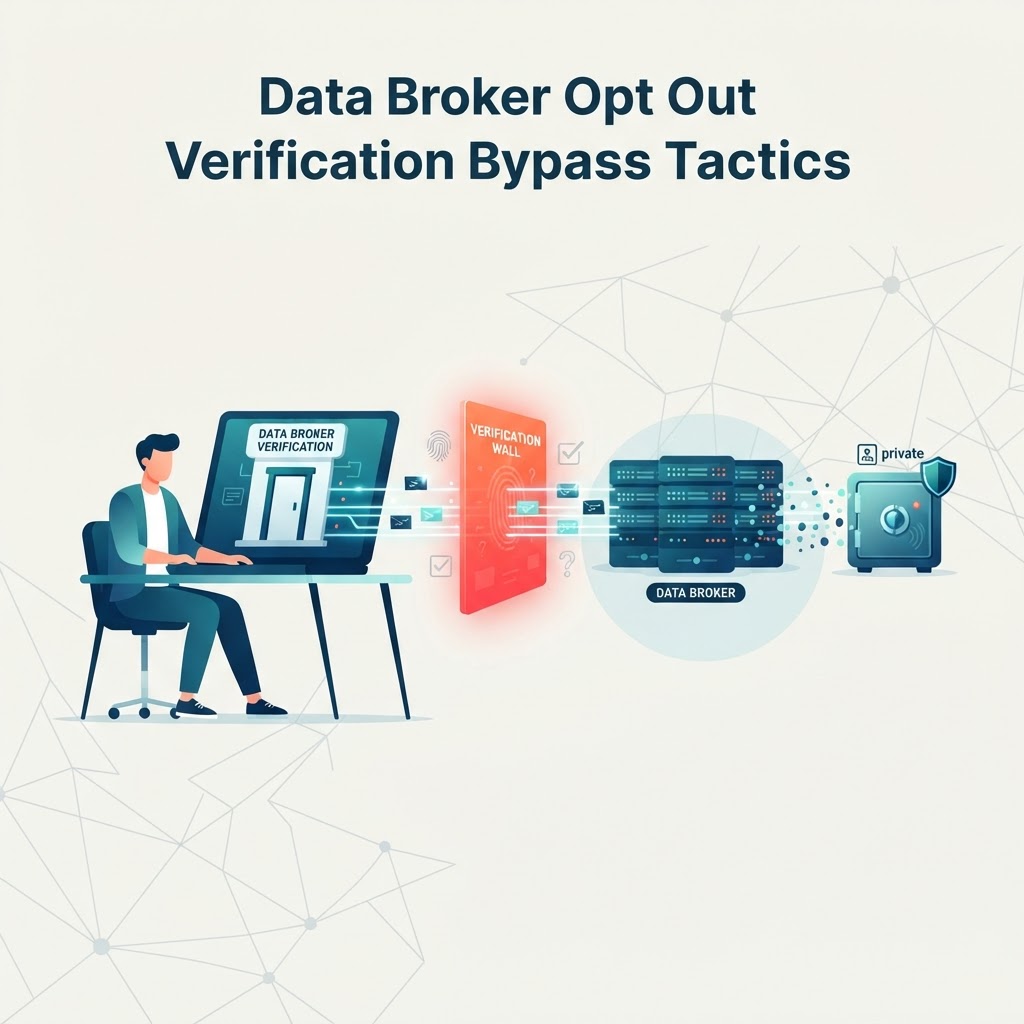
A data broker opt out verification bypass refers to the systematic circumvention of unnecessary identity documentation requirements—such as driver's licenses or utility bills—that brokers use to create friction and deter users from exercising their statutory privacy rights. At DataFreeMe, we provide a global, operationally rigorous platform that helps individuals map their entire household across over 900 data brokers to prune their digital footprint. Led by CEO Stephen Sawyers, a data security expert with deep experience in the sector, we treat privacy as an active, tactical campaign. In our experience, brokers often employ intentionally complex web forms to stall the process, but understanding how to navigate these hurdles is essential to reclaim your information.
We specialize in helping household heads manage their family's data as a connected, relational graph. If you are struggling with a data broker opt out verification bypass, it is vital to remember that companies are legally obligated to respect your deletion requests under frameworks like CCPA §1798.105 or GDPR Article 17, regardless of whether you provide a high-resolution scan of your sensitive ID documents.
What Makes Data Broker Verification So Difficult?
Data brokers thrive on complexity. By mandating identity verification, they create a bottleneck that filters out 90% of privacy-seekers who give up when faced with a request for personal documentation. This is not a security measure; it is a retention strategy designed to keep your records in their database. Our team has analyzed hundreds of platforms, and we have found that brokers often use these manual review queues to stall requests for weeks, effectively ignoring the statutory 45-day window for compliance.
Why Is a Data Broker Opt Out Verification Bypass Necessary?
You need to implement a data broker opt out verification bypass because the burden of proof rests on the company, not you. According to the California Office of the Attorney General, a business must verify that the person making the request is the consumer about whom the business has collected information, but this does not grant them carte blanche to collect your biometric or government-issued ID data. When a site demands a driver's license to opt out, they are ironically collecting more data from you in the moment of your request than they previously held, which is a clear violation of the principle of data minimization.
How Do You Maintain Household Privacy Without Identity Exposure?
Managing the privacy of your entire household requires a, systematic approach. If you only remove your own name, you leave your relatives as conduits for your re-exposure. We advocate for a batch-process workflow where you remove family members from people search sites using a centralized tracking log. By maintaining an audit trail of every request—including timestamps, ticket IDs, and follow-up reminders—you turn a chaotic chore into a manageable IT operation. Our methodology includes:
- Mapping every household member across the 900+ data brokers we track.
- Using masked email services to prevent the return of your primary contact information to broker databases.
- Bypassing intrusive form requirements by using direct opt-out email templates that cite specific statutory language.
- Regularly checking for record reappearance, as data brokers often refresh their databases every 30 to 90 days.
Our approach at DataFreeMe focuses on these administrative efficiencies. By treating privacy like a compliance project, we minimize the time spent negotiating with opaque, friction-heavy interfaces. It is important to realize that a data broker opt out verification bypass is not about hacking the broker; it is about providing the minimum viable information required by law to assert your rights. If a broker pushes back, refer them to their obligations under state or international law. If you feel overwhelmed by the process, our tracking guides provide the structured workflows necessary to prevent burnout while maintaining a 100% removal posture.
We have seen firsthand how persistent manual audit trails discourage brokers from attempting to deny legitimate removal requests. When you document every step of your data broker opt out verification bypass, you build an ironclad case of non-compliance if they choose to ignore you. Whether you are dealing with local aggregators or national people-search giants, the key is consistency. Maintain your logs, track your dates, and never let a 45-day response window pass without a follow-up inquiry.
FAQ
Is it legal to use a data broker opt out verification bypass?
Yes. Providing only the information required by law to verify your identity is a standard part of exercising your CCPA or GDPR rights, and brokers are not permitted to collect unnecessary government IDs to fulfill deletion requests.
How can I avoid sending a driver's license to data brokers?
You can avoid this by using formal email opt-out requests that cite specific statutes like CCPA §1798.105, which compel brokers to honor your request without requiring excessive and invasive identity documentation.
What should I do if a broker refuses my opt-out request?
Log the refusal in your tracking system, cite the relevant privacy statute in your follow-up, and if they persist, consider reporting them to the appropriate regulatory body, such as the California Privacy Protection Agency.
Ready to secure your household? Start by visiting DataFreeMe to begin auditing your exposure and reclaiming your privacy today.