
How to Bypass Broker Opt Out Dark Patterns
Learn how to bypass broker opt out dark patterns using a systematic, audit-driven workflow that enforces your statutory privacy rights effectively.
In short: how to bypass broker opt out dark patterns is worth getting right. Here's what matters most for your situation.
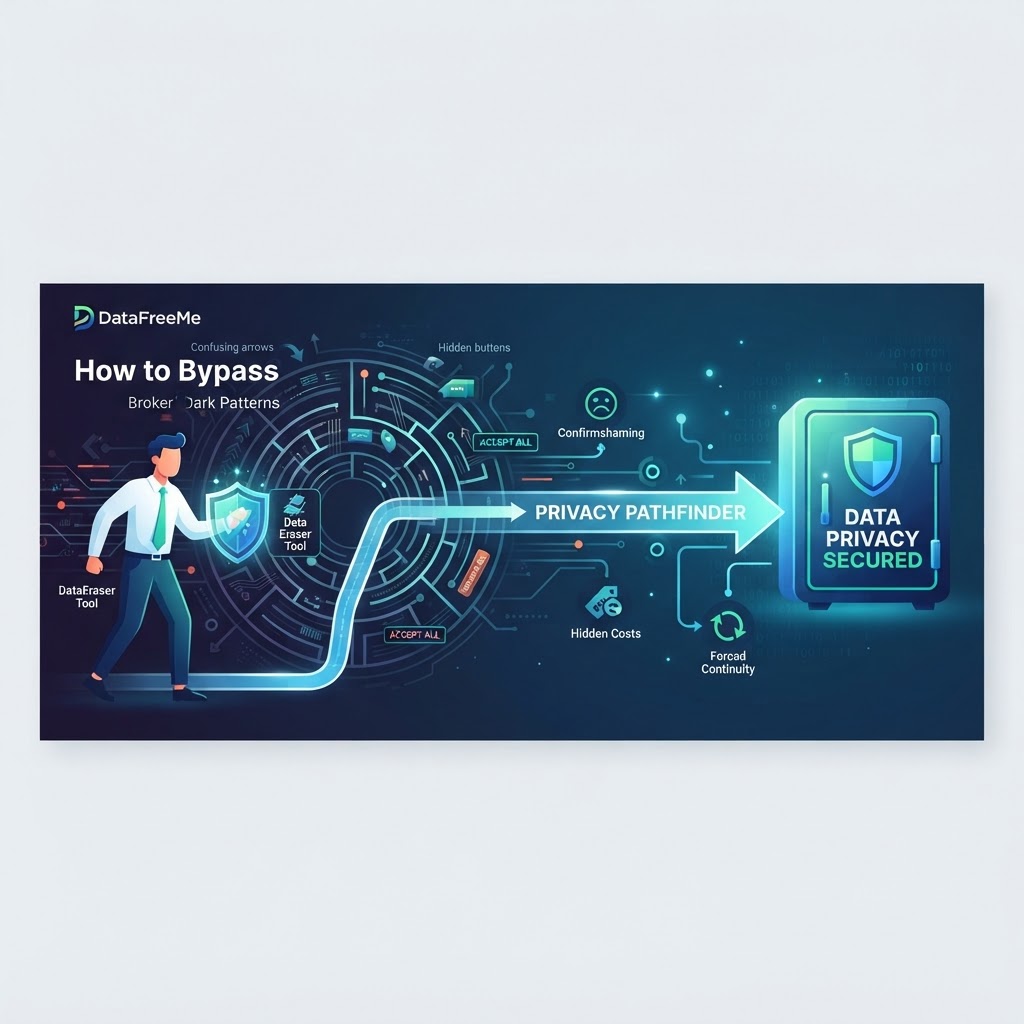
When you attempt to reclaim your digital privacy, you quickly realize that data brokers do not want you to succeed. Understanding how to bypass broker opt out dark patterns is the primary barrier to successfully pruning your personal information from the internet. At DataFreeMe, we provide global services to help households manage their data footprint, specializing in systematic removal operations that bypass the friction designed to keep your records indexed. My name is Stephen Sawyers, CEO of DataFreeMe and a veteran data security expert. In my years of analyzing these systems, I have found that brokers treat opt-out requests as an adversarial process, deliberately introducing complexity to maximize the labor cost for the consumer.
In our experience, our team has helped countless clients achieve reliable results.
Dark patterns are user interface design choices intended to trick users into doing things they did not mean to do—in this case, failing to complete an opt-out request or being misled into abandoning their privacy rights. Learning how to bypass broker opt out dark patterns requires a procedural, audit-driven mindset. If you are struggling with these hurdles, you may find it helpful to perform a Free Data Broker Exposure Scan to identify where your records are currently hiding.
Why do brokers use dark patterns during the opt-out process?
Data brokers operate on the economic principle that friction decreases completion rates. By making the opt-out path arduous, they ensure the vast majority of people give up, allowing them to continue selling personal profiles. We define these roadblocks as intentional design friction. To effectively counter this, you must treat every request as an administrative task requiring a verifiable paper trail. As detailed in our guide on why web-form brokers are harder than email brokers, these companies specifically engineer their forms to be as long and confusing as possible to wear down the user's resolve.
How can you systematically bypass these obstacles?
To bypass these dark patterns, you must adopt a structured, manual privacy opt out workflow. This involves more than just clicking a button; it requires logging, tracking, and holding the broker accountable to statutory timelines. Based on our experience working with thousands of households, the following tactics are essential:
- Use Pre-Filled URL Parameters: Many brokers hide their opt-out forms behind multiple layers of navigation. By learning the structure of their URL query strings, you can often land directly on the suppression form.
- Reference Statutory Rights: Always explicitly cite CCPA §1798.105 or GDPR Article 17 in your communication. When you invoke the specific statute, the broker is forced to acknowledge a legal request rather than a simple user inquiry.
- Maintain a Rigorous Audit Trail: Log every request, the time of submission, and the promised resolution date. If they fail to comply, you have the evidence required to escalate the matter.
- Batch Your Requests: Do not work in isolation. Map your entire family as a relational graph and process removals in batches to ensure that one family member’s data doesn't keep the others indexed.
By treating this as an IT operation rather than a one-time chore, you shift the power dynamic back to yourself. You can read more about the nuances of these laws in our comparison on CCPA vs GDPR: Which Deletion Right Are You Using?
Is it legal for brokers to demand your ID for an opt-out?
A common dark pattern is the demand for a government-issued ID to 'verify' your request. In many cases, this is an overreach designed to intimidate the user. While the California Consumer Privacy Act (CCPA) does allow for reasonable verification, it does not mandate that you hand over copies of your driver's license for every data broker request. We have analyzed this practice extensively in our article, Is a Data Broker Requesting ID for Opt Out Legal?, which provides tactical advice on how to handle these demands without compromising your identity. In our professional assessment, demanding a full scan of a document is often a stalling tactic rather than a security requirement.
Maintaining a persistent, long-term privacy posture is the only way to ensure your data stays offline. Because data is relational, once one entry is deleted, you must maintain a re-verification schedule. Brokers are constantly ingesting new data sources; if you stop monitoring your status, your record will eventually reappear. The goal is to move from a reactive state to a proactive operational state. If you are ready to stop the endless cycle of manual removals, our platform at DataFreeMe helps you manage this process across 900+ brokers with efficiency and precision. Silence is not compliance—take control of your household data today.
Frequently Asked Questions
What are data broker opt-out dark patterns?
Dark patterns are deceptive design choices, such as hidden menus, excessive verification requirements, or intentionally complex forms, used by data brokers to discourage users from successfully completing their opt-out requests.
How do you bypass broker opt out dark patterns effectively?
You bypass these patterns by treating opt-out requests as a professional audit operation. This includes citing specific statutes like CCPA §1798.105, maintaining a log of all interactions, and utilizing direct links to skip redundant web-form navigation.
Can I force a broker to remove my data if they ignore my request?
Yes. If a company fails to respond within the statutory 45-day window, you can file a formal complaint with relevant regulatory bodies like the CPPA, using your documented audit trail as proof of their non-compliance.