
How to File Complaint Against Data Broker Effectively
Learn how to file complaint against data broker entities when they ignore your removal requests, using statutory rights and documented audit trails.
In short: how to file complaint against data broker is worth getting right. Here's what matters most for your situation.
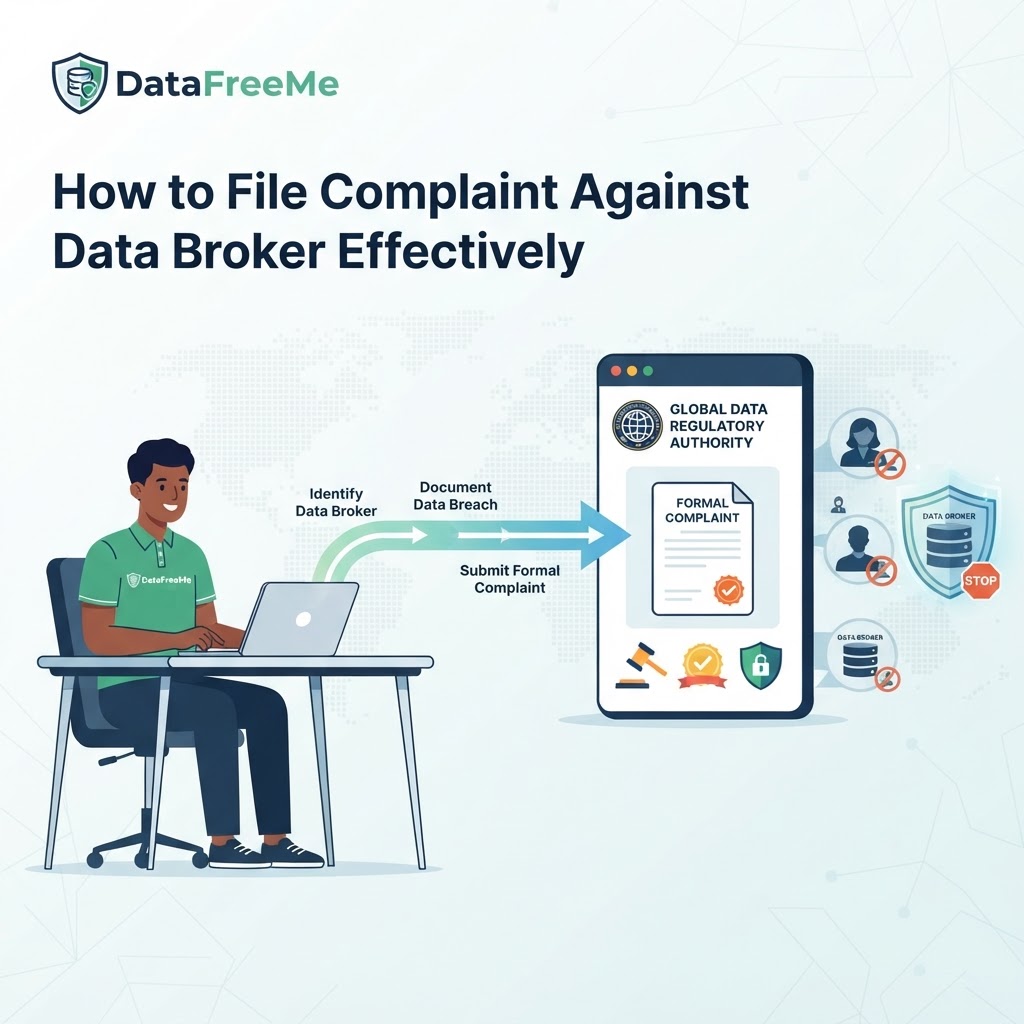
When a data broker ignores your formal removal request, you must know exactly how to file complaint against data broker entities to enforce your statutory rights. At DataFreeMe, we specialize in providing a global, systematic framework for managing your household digital footprint by tracking, mapping, and executing opt-out operations with surgical precision. As a Data Security Expert and CEO of DataFreeMe, I, Stephen Sawyers, have seen firsthand that silence from a broker is not a technical glitch; it is an intentional strategy to exhaust your persistence.
A formal complaint is your primary mechanism for escalating a failed or ignored data deletion request. If a broker violates your rights under statutes like the CCPA or GDPR, filing a documented grievance is the only way to convert your ignored request into a legally actionable audit trail.
How to File Complaint Against Data Broker Procedures
Filing a complaint against a data broker requires a disciplined approach. You are not just sending an email; you are building a record of non-compliance. In our experience at DataFreeMe, brokers often rely on the fact that most consumers will abandon the process after the first ignored follow-up. To successfully learn how to file complaint against data broker agencies, follow these tactical steps:
- Document the Initial Request: Ensure you have a timestamped copy of your original request and any automated receipt the broker provided.
- Verify the Statutory Deadline: Under the CCPA, brokers generally have 45 days to fulfill a request. If you haven't received a confirmation of deletion by this date, the broker is technically in violation.
- Escalate via Official Channels: Check the broker's privacy policy for a specific 'Dispute' or 'Compliance' email address. Do not rely on general contact forms.
- File with Regulators: If the broker remains non-responsive, proceed to file a complaint with the appropriate state or national attorney general's office.
What Documentation is Necessary to Win Your Dispute?
To ensure your complaint is taken seriously, you must provide a verifiable paper trail. We recommend maintaining a household personal data audit checklist that logs every interaction. When you learn how to file complaint against data broker platforms, include these items in your submission: a copy of your initial opt-out request, the date of submission, any refusal or silence, and the specific statutory provision (such as CCPA §1798.105) you are citing. Having this structured data allows you to prove your case to regulatory bodies rather than just making vague accusations.
Why You Must Maintain a Persistent Audit Trail
Data broker networks are essentially vast relational graphs. If you leave even one family member's data unmanaged, the broker can use that connection to rebuild your household profile. This is why we emphasize the importance of tracking 600+ opt-outs manually or through rigorous workflow management. When you finally decide to learn how to file complaint against data broker companies, your audit trail acts as the 'receipt' that proves they received your instructions and failed to act.
Data brokers operate on a cycle of 'relisting.' Even after a successful deletion, databases refresh. Our re-verification schedule is a professional requirement for anyone serious about digital privacy. Without this constant monitoring, your previous effort to file a complaint effectively loses its long-term impact. Treat your privacy like an operational campaign; log every status, record every ticket number, and schedule your follow-up windows with the same discipline you apply to your financial accounts.
For further reading on navigating these complex ecosystems, we provide a free data broker removal template download to help you maintain your operational hygiene. If you are struggling with the friction of these platforms, remember that persistence is your greatest asset. Use these formal channels to demand compliance; do not accept silence as a final answer. By holding these companies to account through official complaint channels, you increase the cost of non-compliance for the broker, eventually forcing them to honor your request to protect your household data.
Frequently Asked Questions
What is the legal basis for filing a complaint against a data broker?
The legal basis depends on your jurisdiction; in California, you cite the CCPA §1798.105 for deletion rights, while in the EU, you cite GDPR Article 17. These statutes define your right to request deletion and the broker's legal obligation to comply within a set timeframe.
How long should I wait before filing a formal complaint?
You should wait until the statutory response window has closed, which is typically 45 days for most US-based data brokers. If you have not received a verifiable confirmation of deletion by this time, you have sufficient grounds to begin the escalation process.
Which regulatory agencies handle these complaints?
In the United States, you typically file complaints with your state Attorney General's consumer protection division or the Federal Trade Commission (FTC). You can find more information about these processes via the Federal Trade Commission official website.
Take control of your household information today. Visit our main portal at DataFreeMe to begin mapping your family's exposure and start your systematic opt-out journey.