
Use a Data Broker Opt Out Log Template for Privacy
Learn how to build and maintain a professional data broker opt out log template to track your household's removal requests and ensure statutory compliance.
In short: data broker opt out log template is worth getting right. Here's what matters most for your situation.
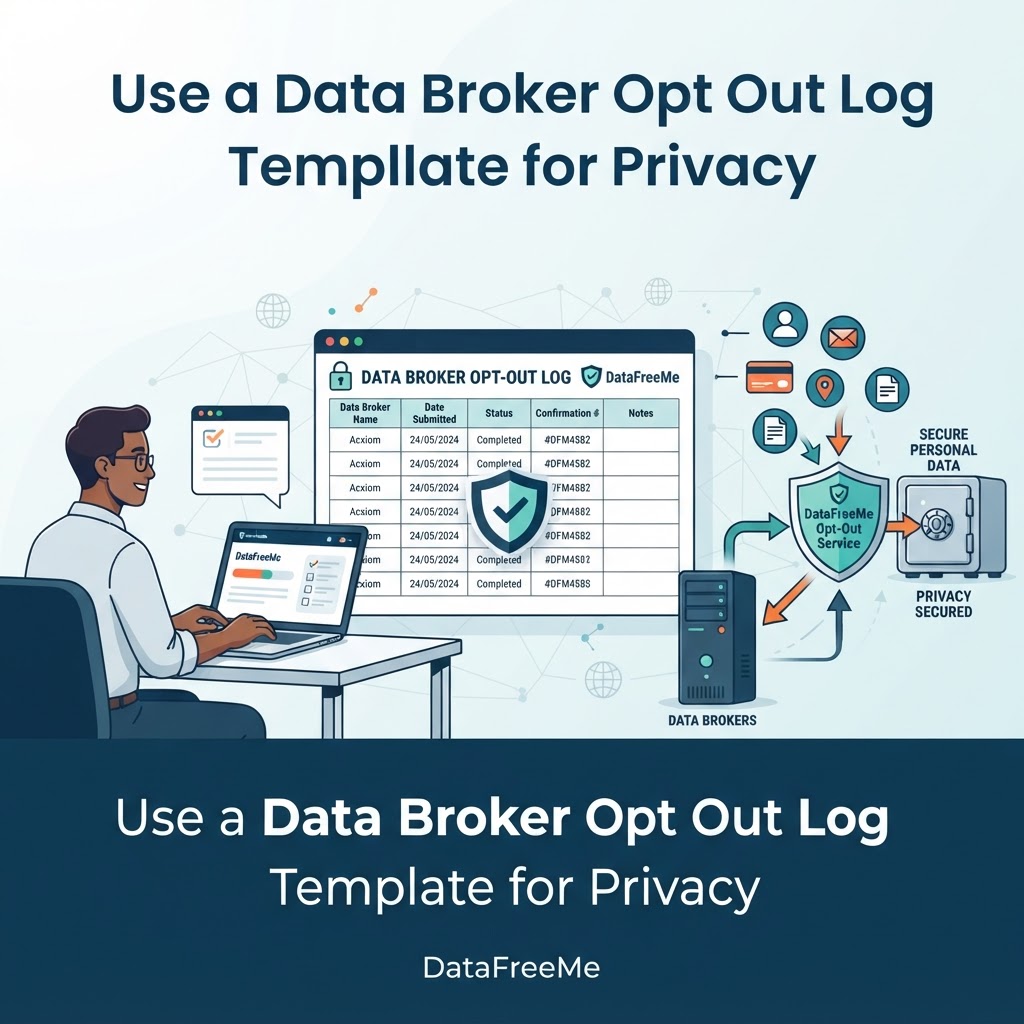
A data broker opt out log template is a structured, operational document used to track the status, timestamps, and statutory compliance of your data removal requests across hundreds of people-search and aggregator sites. By utilizing a rigorous log, you transition from hopeful guessing to an audit-ready privacy workflow that treats your personal information as a professional asset requiring active management.
At DataFreeMe, based globally and led by me, Stephen Sawyers, a data security expert, we specialize in providing the technical infrastructure and methodologies needed to prune your footprint. In our experience managing complex household data graphs, relying on memory is the primary reason privacy campaigns fail. Without a centralized data broker opt out log template, you cannot verify if a site has complied with your request or if they have quietly re-indexed your data after an update cycle.
Why You Need a Data Broker Opt Out Log Template
Data broker networks are not merely passive directories; they are dynamic, relational databases that refresh at inconsistent intervals. Many rely on deliberate friction—such as non-responsive web forms or buried opt-out pages—to discourage you. A comprehensive data broker opt out log template acts as your primary legal defense when these entities attempt to delay or ignore your requests.
When you initiate a removal request, you are often exercising statutory rights such as CCPA §1798.105 or GDPR Article 17. These regulations require brokers to respond within specific windows, such as the 45-day response period under California law. If they fail to comply, your log serves as the critical audit trail required to escalate your complaint to regulatory bodies like the California Privacy Protection Agency (CPPA).
How to structure your tracking system
To be effective, your tracking system must move beyond a simple spreadsheet. We recommend a system that captures the following data points for every entry:
- Broker Name: The specific entity or site.
- Date of Request: The exact timestamp of your submission.
- Method of Opt-Out: Whether you used an email, a web form, or a batch opt out request system.
- Confirmation Reference: The receipt ID or email thread provided by the broker.
- Status: Pending, Confirmed, or Needs Follow-Up.
- Re-Audit Date: A future date to verify if your record has reappeared.
We have found that treating your household data as an interconnected graph—where one family member's record exposes another—is the only way to ensure true privacy. For more on managing your entire household, consult our guide on household data privacy management.
How to manage your opt-out workflow
The operational reality of privacy is that silence is not compliance. Data brokers often count on the fact that you will forget to verify their actions. Our team has spent years refining the data broker opt out log template to address the persistence of these records. By implementing an audit-driven workflow, you can ensure that removals are permanent rather than temporary suppression.
First, identify the brokers relevant to your location. You can perform a free data broker exposure scan to see how many of the 900+ entities we track likely hold your information. Once identified, do not tackle them all at once. Batch your requests to manage the workload and update your log immediately after each batch is sent. This proactive logging ensures you never miss a follow-up window.
For brokers that use notoriously difficult interfaces, refer to our analysis on why web-form brokers are harder and use our techniques to bypass their friction. Always maintain a folder of screenshots or PDFs of your submission confirmations; these serve as evidence of your verifiable consumer request. You can find detailed requirements for these submissions through resources like the California Attorney General's Office.
Maintaining a data broker opt out log template is not a one-time task, but a continuous operation. By keeping your logs updated, you create an insurmountable barrier for brokers looking to profit from your personal history. Remember, the goal is to make the cost of keeping your data higher than the value they derive from selling it. When you make the effort to track every request, you effectively remove yourself from the commodity cycle of modern data surveillance.
Final steps for long-term privacy
After your initial batch is processed, your job is only half-done. You must return to your log every 3-6 months to perform a re-audit. Data brokers refresh their databases regularly, and old data can migrate from one site to another via wholesale aggregators. Use your data broker opt out log template to systematically prune these re-indexed records, keeping your household footprint at the absolute minimum.
Start your own audit trail today by mapping your household, identifying your highest-priority brokers, and documenting every interaction. If you need a starting point for your database, consider our resources on DataFreeMe to begin your removal campaign.
FAQ
What should I include in a data broker opt out log template?
Your log should track the broker name, submission date, request method, confirmation ID, current status, and a scheduled re-audit date to check for record reappearance.
Why is it necessary to log my opt-out requests?
Logging provides an essential audit trail that forces accountability, ensuring brokers adhere to statutory timelines and providing proof of non-compliance if you need to file a formal complaint.
How often should I update my opt-out log?
You should update your log every time you initiate a new request and perform a comprehensive review of your entire log at least every 90 days to verify that no records have been re-indexed.