
Is a Data Broker Requesting ID for Opt Out Legal?
Is a data broker requesting ID for opt out legal? Learn how to navigate aggressive verification tactics and protect your identity while opting out.
In short: data broker requesting id for opt out legal is worth getting right. Here's what matters most for your situation.
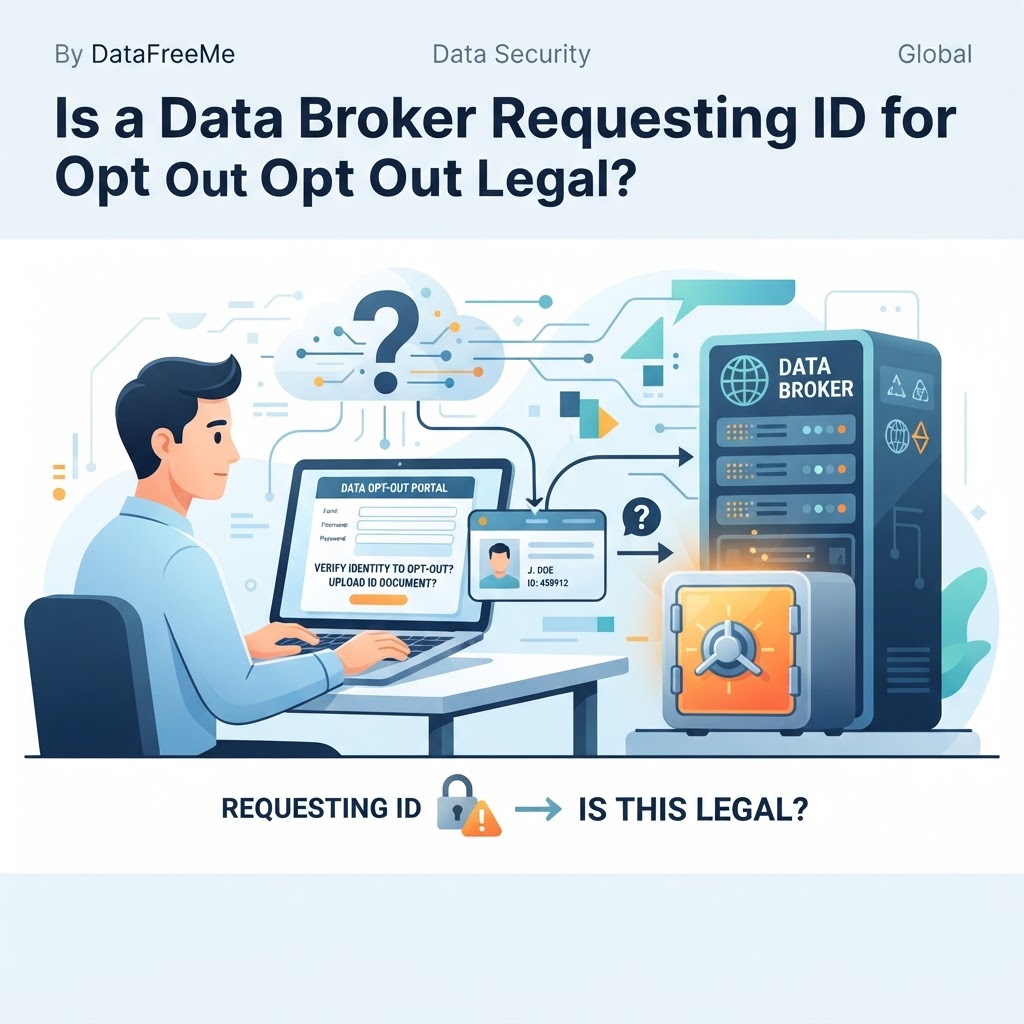
When you attempt to scrub your household from data aggregator databases, you will inevitably encounter the most common friction tactic in the industry: the request for government-issued identification. You are likely asking, "Is a data broker requesting ID for opt out legal?" The short answer is: in most jurisdictions, no—it is rarely a legal requirement and is often an over-collection tactic designed to intimidate you into abandoning your request.
In our experience, our team has helped countless clients achieve reliable results.
At DataFreeMe, we provide a global service for household-level privacy management. I am Stephen Sawyers, CEO and Data Security Expert at DataFreeMe. In our years of experience tracking over 900 data brokers, we have found that legitimate removal requests under statutes like the California Consumer Privacy Act (CCPA) or the General Data Protection Regulation (GDPR) do not require a scan of your driver’s license or passport. We specialize in helping families map their exposure and execute a systemic manual privacy opt out workflow to regain control of their digital footprint.
Why Do Brokers Use Identity Verification as a Barrier?
Data broker identity verification is frequently a dark pattern designed to increase the cost of compliance for the user while potentially gathering even more sensitive data. By data broker requesting ID for opt out legal compliance, they are effectively baiting you into uploading a high-resolution image of your government ID. This creates a "compliance paradox" where you are forced to provide more personal information than the broker currently has on file just to request the deletion of what they already possess.
Are You Legally Required to Provide ID?
In the vast majority of cases, the answer is no. Under CCPA §1798.105, companies are required to verify the identity of the consumer making a request, but they must do so in a way that is "commensurate" with the sensitivity of the information. Providing a copy of a driver’s license is rarely necessary to verify your identity for a basic people-search listing. As outlined in our guide on CCPA vs GDPR deletion requests, if a broker forces you to submit an ID, they are often attempting to stall the process or harvest a verified, high-value document from you.
When you encounter a web form that demands your ID, pause. We suggest you treat these interactions as part of an audit trail. If you believe a company is violating your rights, you can refer to our guide on how to file complaint against data broker entities that act in bad faith. You can also learn more about why web-form brokers are harder than email brokers by reviewing the intentional friction points they build into their systems.
Tactical Response to ID-Harvester Brokers
When you are navigating the landscape of 900+ brokers, you need a standard operating procedure. Instead of blindly uploading your ID, try these tactical steps to maintain your privacy hygiene:
- Verify the statutory requirement: Check if the jurisdiction (e.g., California, EU) explicitly mandates that specific level of verification for the data in question.
- Redact non-essential info: If a firm insists on an ID to process the request, redact everything except the name and address that matches their public record. Never leave your license number or birthdate visible.
- Audit the request: Log every attempt. If the broker is simply harvesting, document their demand for ID as a potential regulatory violation.
- Use masking: Consider masking personal email for data broker opt outs to keep your primary contact information out of their secondary marketing funnels.
For more technical details on how to manage this, you can visit the Federal Trade Commission (FTC) website regarding consumer data privacy. Remember that data broker re-listing is common, which is why establishing a consistent re-verification schedule for data broker opt outs is the only way to ensure your family's records remain pruned.
We have successfully guided thousands of users in managing their household data as a relational graph. By treating privacy as a series of documented workflows rather than a one-time event, you neutralize the adversary's advantage. Do not let a data broker requesting ID for opt out legal pretense stop your progress. Stay vigilant, keep your audit trails, and keep the pressure on.
Frequently Asked Questions
Is a data broker requesting ID for opt out legal to demand?
Generally, no. While brokers must verify your identity, they are required to use methods that are proportional to the sensitivity of the data. A driver's license is rarely the only acceptable form of verification.
What should I do if a broker forces me to upload a government ID?
If you must provide an ID to proceed, always redact sensitive information like your license number, signature, and date of birth. If the broker continues to demand unredacted documents, consider filing a complaint with the relevant regulatory body.
How can I verify a broker's identity request?
Check the broker's own privacy policy to see what they define as necessary for verification. If their policy contradicts their form requirements, this is a clear sign of unnecessary friction intended to discourage you from exercising your rights.