
How to Verify Data Broker Registration Status
Learn how to verify data broker registration status through a rigorous, audit-driven process that ensures your family's data remains private and removed.
In short: how to verify data broker registration status is worth getting right. Here's what matters most for your situation.
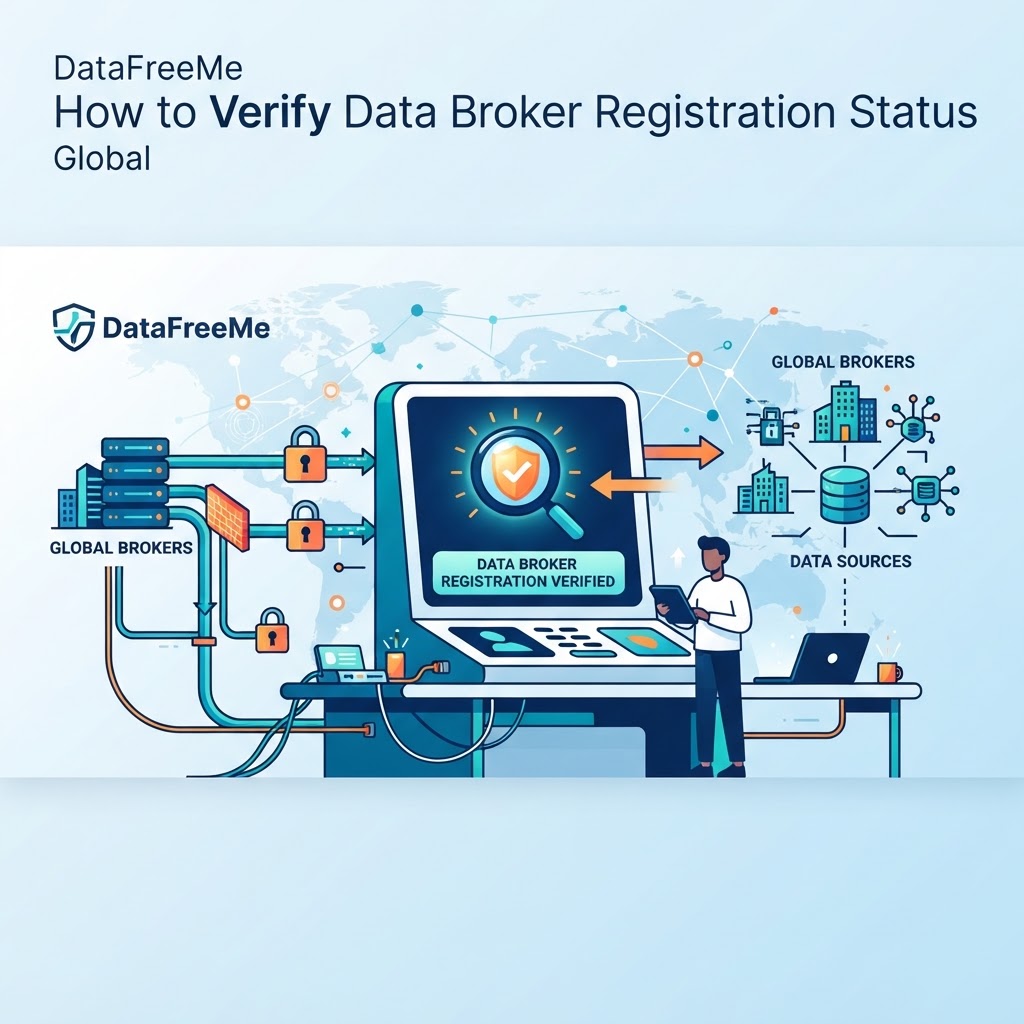
To verify data broker registration status, you must cross-reference your specific jurisdiction’s mandatory registry lists against the active brokers operating within that region, such as the California Delete Act’s DROP platform. At DataFreeMe, we specialize in global data privacy operations, providing the tools and methodologies required to prune household records from over 900+ data brokers. I am Stephen Sawyers, CEO of DataFreeMe, and in my 15+ years of data security experience, I have found that most consumers erroneously trust that brokers will notify them of their status, which is rarely the case.
Data Security Expert.
If you are wondering how to verify data broker registration status, you are already ahead of the average user. Most people treat privacy like a passive state, but true data hygiene is an active, ongoing campaign. In our experience, verifying whether a broker has registered your data requires a systematic audit of your household's digital footprint. Because data brokers often operate as an adversarial system designed with intentional friction, you cannot rely on automated promises; you must build an audit trail.
Why Is It Essential to Verify Data Broker Registration Status?
Data brokers build relational graphs of families. If you leave even one family member unmanaged, brokers can reconstruct your household profile in a matter of weeks. When you ask how to verify data broker registration status, you are essentially asking how to shrink the relational graph of your home. Without a consistent process, you are fighting a losing battle against automated scraping.
In the United States, particularly in California, legislation has empowered consumers to demand transparency. You should start by utilizing the California Delete Act DROP platform guide to understand the regulatory floor. However, compliance is not automatic. Brokers often attempt to hide behind complex, multi-layered interfaces. To master this, you must treat every request as an IT operation. Log every timestamp, keep every receipt, and track every status update using a data broker opt-out log template.
How Do You Conduct a Regular Verification Audit?
An effective audit isn't a one-time event; it is a recurring workflow. We have found that the following steps provide the most reliable verification:
- Inventory Your Household: Map every person in your home against the list of 900+ data brokers we track.
- Check Official Registries: Consult state-mandated databases to see which entities are legally required to file in your jurisdiction.
- Submit Targeted Requests: Use our opt-out management tools to send deletion requests citing CCPA §1798.105 or GDPR Article 17.
- Log and Re-Verify: After the 45-day window closes, verify the broker has complied and check for re-listing periodically.
If you fail to verify data broker registration status, you are leaving the door open for "ghost profiles" to return. Many brokers use aggregators to pull data from secondary sources even after you have opted out of the primary site. This is why our team at DataFreeMe emphasizes that you must manage the household, not just the individual.
What Are the Common Obstacles in Verifying Status?
The primary barrier to verifying your status is the intentional friction built into broker web forms. Many sites make it intentionally difficult to find the status of your opt-out request. In our experience, these sites use "dark patterns" to discourage you from continuing. Furthermore, not all brokers are created equal. You must understand the difference between people search vs data broker aggregator sites, as the latter can re-populate your information from thousands of disparate sources.
When you cannot verify your status through a public portal, you must invoke your statutory rights. As defined by the California Office of the Attorney General, businesses are obligated to respond to verified consumer requests. If a broker fails to provide proof of deletion, you have the legal leverage to escalate. This is why we recommend masking personal email for data broker opt outs; it provides a clean, neutral audit trail that forces the broker to respond to the address specifically created for the audit.
Continuous verification is the only way to ensure your household isn't being re-indexed. Our approach is to treat the process as a persistent maintenance loop. If you find your data reappearing, do not view it as a failure of your initial request, but as a standard data broker tactic. They refresh their caches constantly, and your defense must be equally persistent.
Start your journey toward a smaller data footprint today by auditing your current exposure. Visit our Free Data Broker Exposure Scan to see the extent of your current public profile and begin the process of reclaiming your privacy. Silence is not compliance; you must verify, log, and follow up to ensure your data stays off the market.
Frequently Asked Questions
How can I verify if a data broker has deleted my information?
You can verify deletion by re-searching your personal details on the broker's site after the 45-day statutory response window has passed and by maintaining a detailed log of your original request and receipt.
What is the best way to verify data broker registration status for my family?
The most effective way is to treat your household as an interconnected data graph, mapping each family member against a master directory and tracking every removal request in a centralized log.
Why do data brokers ignore my verification requests?
Data brokers often use intentional friction and dark patterns to delay or ignore requests; you must cite specific statutes like CCPA §1798.105 or GDPR Article 17 to establish the legal leverage required to force a response.