
How to Track Data Broker Opt Out Requests Effectively
Learn how to systematically track data broker opt out requests to reclaim your household's privacy, prevent data re-indexing, and maintain an audit trail.
In short: track data broker opt out requests is worth getting right. Here's what matters most for your situation.
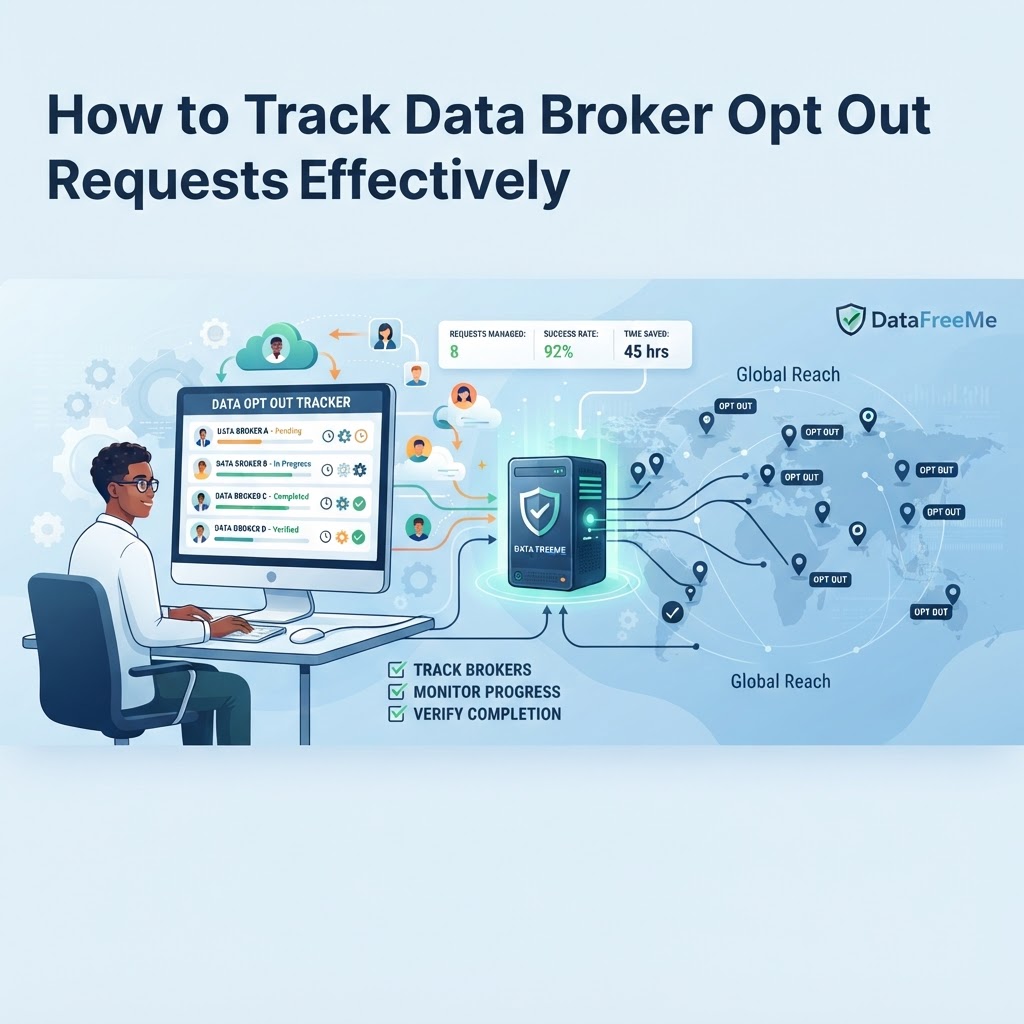
When you initiate a privacy removal campaign, you must realize that silence is not compliance. At DataFreeMe, we specialize in helping individuals regain control of their digital footprint across our global service area. To maintain true household privacy, you must learn how to track data broker opt out requests with the same rigor you would apply to any professional audit. I am Stephen Sawyers, CEO of DataFreeMe and a data security expert; in my experience, the only way to beat the intentional friction of data brokers is through systematic, documented persistence.
This guide is current for 2026.
A data broker opt-out request is a formal notification—typically sent via email, web form, or mail—demanding that a data collection entity cease the sale and distribution of your personal information. Tracking these requests is a critical operational task because brokers often delay, ignore, or perform "soft" removals that allow your data to reappear within weeks. Without a robust log of your activities, you are essentially flying blind against a multi-billion dollar industry that relies on your lack of follow-up.
Why You Must Track Data Broker Opt Out Requests
Managing privacy at the household level is a complex logistical operation. Because brokers aggregate data into relational graphs, failing to remove a single relative can lead to your own information being re-linked to your profile. We often see users assume a request is complete after one click, only to find their data re-indexed 90 days later. Effective tracking allows you to enforce your data broker statutory deletion rights by creating an undeniable audit trail that brokers find difficult to ignore.
The Anatomy of a Privacy Audit Trail
To successfully track data broker opt out requests, your system must capture more than just a date. You need an operational log that records specific metadata for every interaction. In our experience at DataFreeMe, an effective log includes the following fields for every broker:
- Date of Request: The exact timestamp of when your communication was sent.
- Broker Identity: The specific domain, legal entity, and contact method used.
- Status Indicators: Whether the request is "Pending," "Verified," "Denied," or "Re-indexed."
- Communication Receipt: A saved copy of the email or a screenshot of the confirmation page.
- Follow-up Window: A scheduled date to re-verify the removal status, usually pegged to the statutory response window.
By treating each removal as a discrete event in a Data Broker Deletion Audit Trail Spreadsheet, you move from reactive consumer behavior to a proactive security stance. This ensures you can hold brokers accountable when they violate legal requirements like those defined in California SB 362.
How to Maintain Hygiene Across Your Household
Managing the digital identity of a whole family requires a shift in perspective. You are not just deleting a single record; you are pruning a relational tree. When you opt out family members from data brokers, you reduce the attack surface of the entire household. We recommend batching your work to maintain sanity, especially when dealing with the hundreds of brokers currently operating in the ecosystem.
Some brokers complicate this process by refusing email-based requests and forcing users through broken, labyrinthine web forms. These are designed to create friction and discourage opt-outs. We have found that keeping a dedicated log of these "problem" brokers allows you to re-target them effectively without needing to re-search your entire list every single time. Utilizing tools like masking personal email for data broker opt outs provides an additional layer of verification that your requests are being processed while shielding your primary inbox from marketing spam.
Remember that your goal is to force a permanent deletion. If a broker fails to respond within the mandated 45-day window, your documented audit trail serves as the primary evidence for escalation. By maintaining a clean and updated tracking system, you transform privacy management from a chore into a verifiable, repeatable operational process.
FAQ Section
Why is it necessary to log every data broker opt-out interaction?
Data brokers frequently re-list information after a period of time; without an audit trail, you have no way to prove a previous request was made or to enforce compliance when they fail to honor your rights.
How long should I keep records of my data removal requests?
We recommend maintaining your removal logs indefinitely, or at least as long as you maintain your digital presence, to ensure you can quickly audit any platform that re-publishes your personal details.
What is the most common reason data brokers reject removal requests?
Brokers often reject requests due to missing "verifiable consumer request" documentation or because the request was submitted via an improper channel, such as using a generic email rather than the specific form they require.
Can I automate the tracking process for hundreds of brokers?
While you can use spreadsheets to track manual efforts, the most effective approach is to utilize structured databases that map your entire household's exposure across the 900+ brokers identified in our DataFreeMe directory.
In conclusion, taking control of your family's privacy is an ongoing campaign, not a one-time event. If you are ready to stop the endless cycle of re-listing, start by documenting every request and auditing your status regularly. You can check your current exposure for free today to identify the most immediate threats to your household's privacy.