
Automated Data Removal vs Manual Tracking Audit
We compare the effectiveness of automated data removal vs manual tracking audit to help you decide how to best manage your household's digital privacy footprint.
In short: automated data removal vs manual tracking audit is worth getting right. Here's what matters most for your situation.
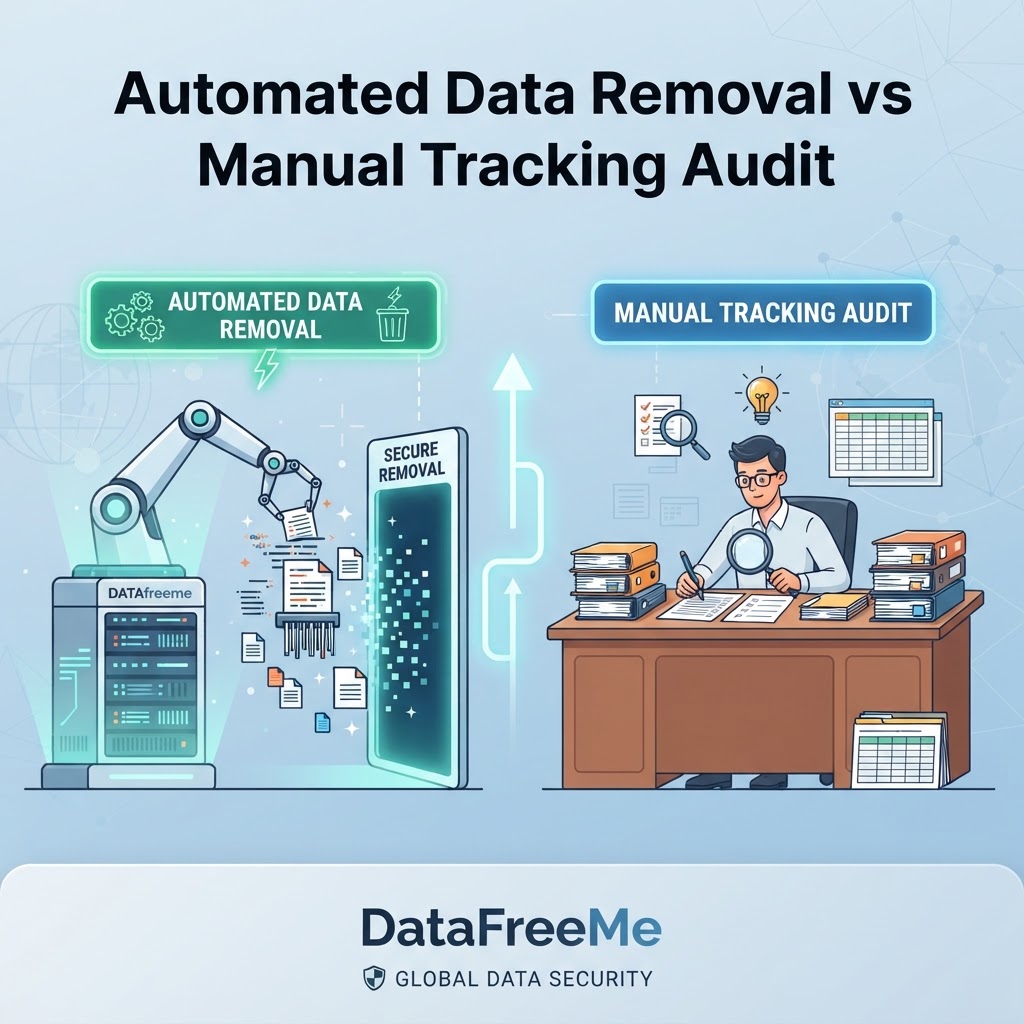
Automated data removal vs manual tracking audit is the fundamental debate in personal privacy management. At DataFreeMe, we define automated data removal as the use of scripts or subscription services to submit bulk opt-out requests, while a manual tracking audit is the systematic, verified process of logging every removal request to ensure long-term compliance across over 900+ data brokers. As an expert in data security, I, Stephen Sawyers, have spent years analyzing how systemic surveillance capitalism operates globally. Our team at DataFreeMe specializes in helping households reclaim their digital autonomy by providing tools to map, track, and verify the removal of their personal data from the relational graphs brokers use to profile families.
When you weigh automated data removal vs manual tracking audit, you are essentially choosing between convenience and operational certainty. Many services promise a 'one-click' fix, but in our experience, these automated tools often fail to provide the verifiable receipts necessary to hold brokers accountable. A robust manual tracking audit, by contrast, treats every request as a distinct legal event. By maintaining a meticulous record of timestamps, statutory citations like CCPA §1798.105, and follow-up communication, you create an unassailable audit trail that forces brokers to honor your rights.
Why Is Automated Data Removal Often Insufficient?
Many consumers flock to automated services because they want an immediate solution to a complex problem. However, data broker databases are fluid and aggressive; they constantly ingest new data from public records and social media. Automated tools frequently lack the nuance required to handle the diverse array of web forms and email-based opt-out requests. A truly effective manual privacy opt out workflow requires understanding the specific mechanics of each platform. If an automated service submits a request but fails to verify the outcome, you are left with a false sense of security while your data remains in the wild.
We have found that the most persistent data re-listing occurs precisely where automation ends and verification begins. Automated systems often treat a 'submit' button click as a success, whereas a meticulous operator knows that the real work begins when the 45-day response window defined by California law expires without confirmation. If you want to understand the scale of the problem, use our free data broker exposure scan to see how your footprint is currently indexed across the ecosystem.
The Power of a Manual Tracking Audit
A manual tracking audit turns the table on data brokers by shifting the burden of proof back onto them. When you track your own opt-outs, you aren't just sending emails; you are building a paper trail of non-compliance. This is crucial if you ever need to file a complaint against a data broker for failing to respect your statutory requests. By logging every status update, you are practicing what we call hygiene, which is the cornerstone of sustainable privacy.
- Documenting every request with a unique identifier or screenshot.
- Establishing a re-verification schedule to catch data re-listing.
- Managing your household as a connected graph to prevent relational data leaks.
- Using a data broker removal template to standardize communication.
By comparing automated data removal vs manual tracking audit, it becomes clear that while automation can save time, it cannot replace the diligence of an operator. We advocate for a hybrid approach: use automation to identify targets, but rely on manual tracking to verify the finality of the deletion. This ensures that you aren't just checking a box, but actually reducing your household's profile size across the broker network.
How Do You Manage a Household Audit at Scale?
The secret to success is viewing your family as a relational data graph. Because brokers link records by address, phone number, and association, leaving one family member off the audit will likely lead to the re-profiling of your entire household. You must approach this with the same rigor you would use for a financial audit or a legal compliance project. Our guide on how to track data broker opt out requests provides the structural framework needed to handle hundreds of entries without burning out. Consistency is the only way to ensure that brokers don't simply wait out your initial enthusiasm and re-populate your information once your request slips off their priority list.
Remember that the privacy industry is not a static one. Brokers change their domain names, update their opt-out forms, and invent new friction tactics constantly. By maintaining a living document—an audit trail—you are ready to pivot whenever a broker updates their suppression list policy. Your privacy is an operational campaign that requires a commitment to ongoing maintenance, not a singular, fleeting action. Start your journey by auditing your footprint today and taking the steps to prune your relational graph for the long haul.
FAQ
Is manual tracking really better than automated tools?
Yes, because manual tracking provides a verifiable audit trail that holds brokers accountable, whereas automation often misses nuances in broker opt-out requirements and fails to confirm deletions.
How long does a manual audit take for an entire household?
While the initial audit and opt-out phase can take several hours, maintaining a structured schedule for re-verification typically requires only a few minutes per week once your system is established.
What should I do if a broker refuses my manual request?
If a broker ignores your request, use your established audit trail to escalate the matter by filing a complaint with the relevant regulatory body, citing your documented record of correspondence and the specific statutory grounds for deletion.