
Why Do Data Brokers Relist Deleted Information?
Data brokers constantly refresh their identity graphs, causing deleted information to reappear. Learn why this happens and how to manage your privacy audit trail.
In short: why do data brokers relist deleted information is worth getting right. Here's what matters most for your situation.
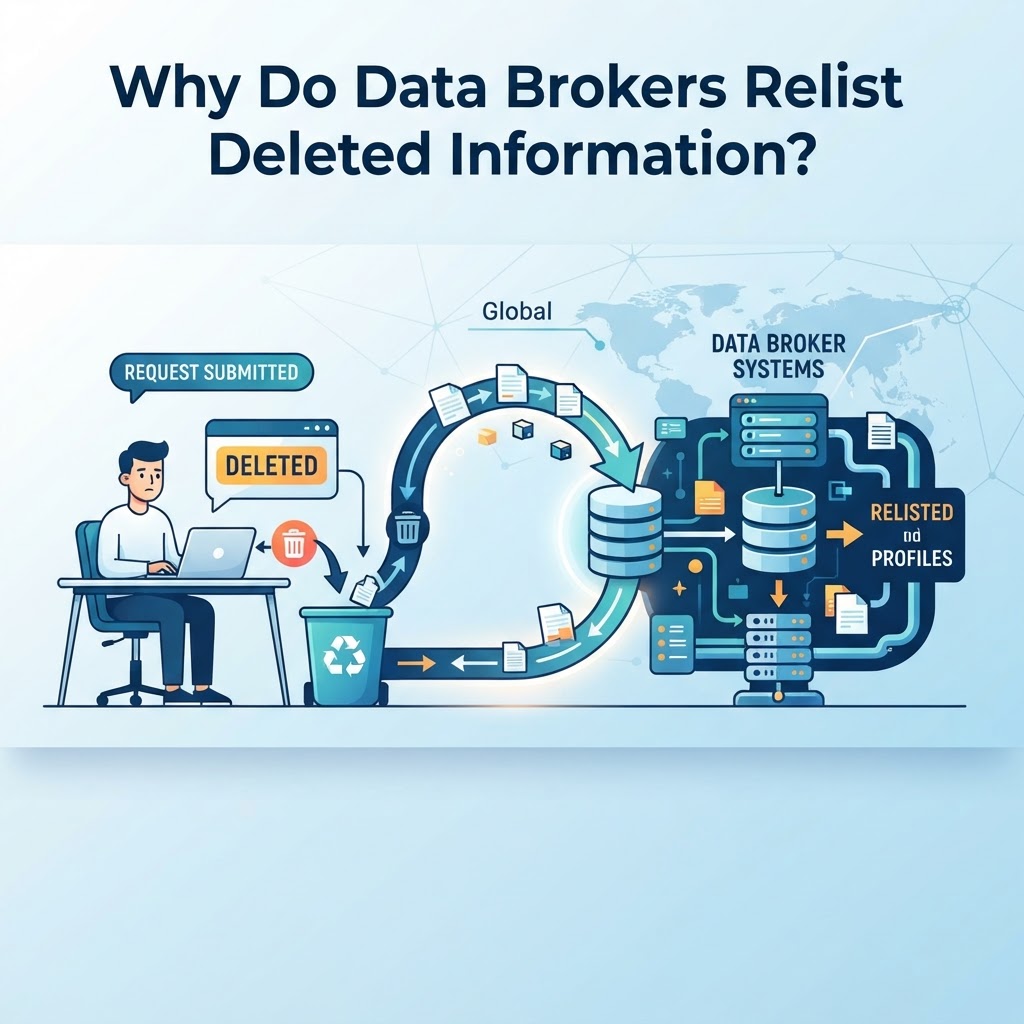
When you successfully opt out of a data broker, the silence that follows is often temporary. You may find yourself asking, why do data brokers relist deleted information after you have explicitly requested removal? At DataFreeMe, we operate globally to help you navigate this systemic friction. As a data security expert, I, Stephen Sawyers, have spent years analyzing how brokers operate, and the reality is that re-listing is not a bug—it is an intentional feature of their business model.
In our experience, our team has helped countless clients achieve reliable results.
Data brokers, or information aggregators, build value by maintaining massive identity graphs. When you request a removal, they are legally compelled under frameworks like CCPA §1798.105 or GDPR Article 17 to delete your specific record. However, they frequently "re-discover" your information from secondary sources. In my experience, these companies view your personal profile as a living, breathing asset that must be refreshed to stay relevant. If you aren't actively tracking your digital footprint, your data will inevitably drift back into their ecosystem.
Why Do Data Brokers Relist Deleted Information Despite Opt-Outs?
The primary reason data brokers relist deleted information is the constant ingestion of new, incoming data streams. These companies aggregate data from thousands of sources, including public records, utility providers, social media, and third-party marketing networks. Even if you scrub your presence from a specific broker, their backend systems might ingest a fresh batch of data from a property tax roll or a voter registration database that links your identity back to the broker's platform.
Furthermore, because data brokers often operate as relational graphs, they link individuals through family connections. If one of your family members hasn't opted out, your data may be pulled back into the broker's database as a "related person" attached to their profile. We specialize in helping households manage these relational data risks, ensuring that privacy is maintained at the group level rather than just the individual level. You can learn more about this approach in our guide on how to opt out family members from data brokers.
How Do Brokers Bypass Your Privacy Requests?
Brokers often utilize "shadow" versions of their websites or partner with secondary data aggregators. When you submit an opt-out, it may only cover the primary domain, while the underlying records persist in the broader ecosystem of data broker aggregators. This is why we advocate for how to track data broker opt out requests effectively, maintaining a rigorous audit trail that proves your request was delivered and received.
- New Data Ingestion: Brokers constantly poll public records and marketing databases.
- Relational Graph Merging: Your record is reconstituted through family ties or shared addresses.
- Aggregator Syndication: A deletion at the primary broker does not always propagate to their 50+ secondary marketing partners.
- Broken Opt-Out Forms: Some brokers intentionally design their opt-out forms to fail, requiring you to follow up with secondary legal notifications.
How Can You Stop the Re-Listing Cycle?
If you want to maintain your privacy, you must shift your mindset from a one-time task to an operational workflow. Data broker removal is a process of maintenance, similar to auditing your bank accounts. You need to implement a system that accounts for the fact that databases are never truly static. For detailed strategies on maintaining your audit trail, check out our Data Broker Deletion Audit Trail Spreadsheet.
We have found that consistent, verifiable consumer requests are the only way to hold brokers accountable. According to the California Office of the Attorney General, businesses have clear obligations to respond to these requests, and documentation is your strongest leverage. By keeping logs of every submission, you create an archive that proves the broker was informed, providing the necessary evidence if you ever need to file a formal complaint.
At DataFreeMe, we believe that silence is not compliance. You must map your household, cite the relevant statutes, and follow up every 45 days. By treating your personal data as a tactical operation, you can force brokers to keep your records pruned and your household's digital footprint small.
Frequently Asked Questions
Why do data brokers relist deleted information so quickly?
Data brokers frequently re-list information because they continuously aggregate new data from public records, marketing lists, and third-party sources. Since your data is constantly being pulled from new points of contact, they can easily associate that "new" data with your old profile in their database.
Does a single opt-out request guarantee permanent removal?
Unfortunately, no. Because the data ecosystem is dynamic and relational, a single opt-out rarely lasts forever. You must perform recurring audits and follow-up requests to ensure that your data does not reappear through record refreshes or household-level re-linking.
How can I track if my data has been re-listed?
The most effective way is to maintain a spreadsheet audit trail of all previous removal requests. By periodically checking the broker sites for your information, you can identify if a record has surfaced again and immediately issue a follow-up notice citing your original request.
Ready to reclaim your household's privacy? Start by visiting our Free Data Broker Exposure Scan to see the extent of your footprint, or explore our full platform at DataFreeMe to begin your systematic opt-out campaign.