
Using DROP to Force Data Broker Deletion
Learn how to use the California Delete Act's DROP platform to force data brokers to delete your information through a rigorous, audit-driven approach.
In short: using DROP to force data broker deletion is worth getting right. Here's what matters most for your situation.
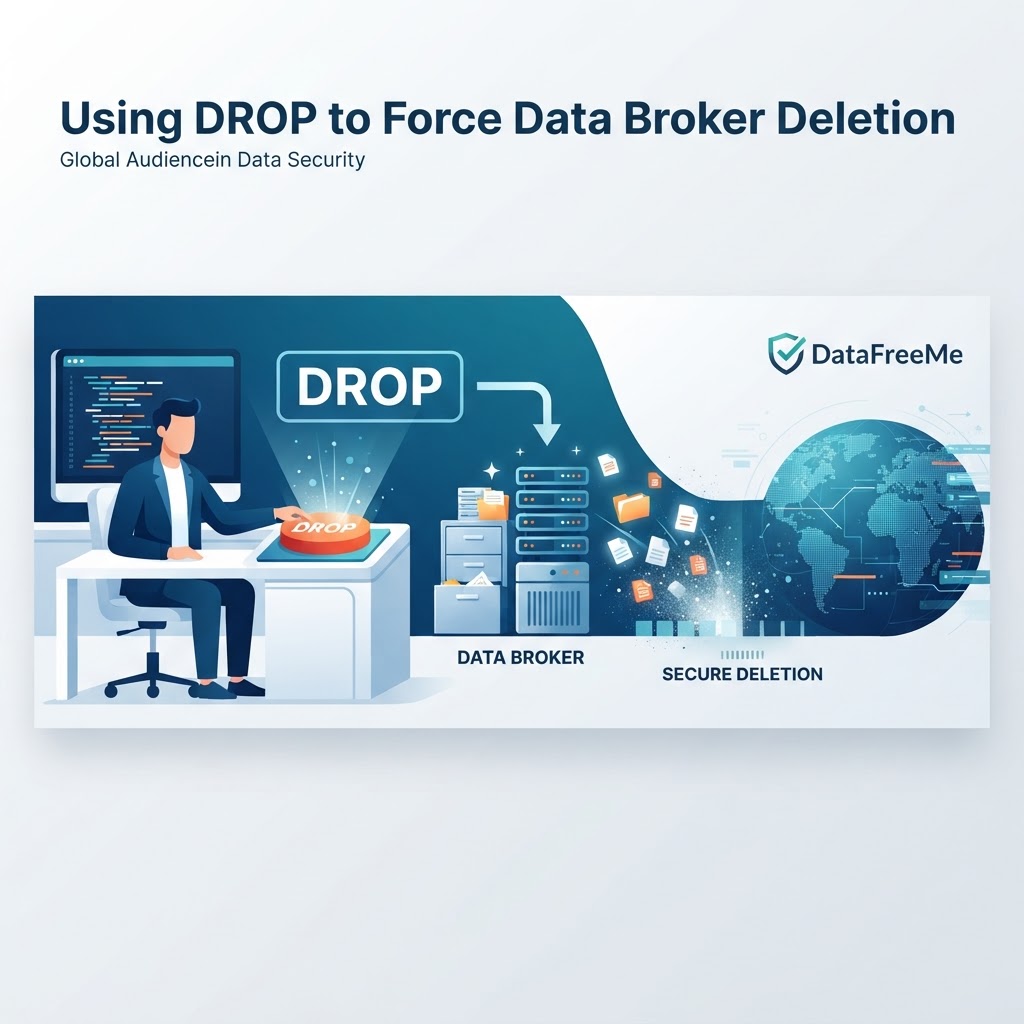
When you are looking to regain control of your digital footprint, using DROP to force data broker deletion is the most effective operational shift you can make in the state of California. As the CEO of DataFreeMe, an authority in the global data security space, I, Stephen Sawyers, have spent years documenting the persistent friction data brokers use to maintain their profiles on your family. Our team at DataFreeMe specializes in helping users navigate these complex systems, and we have found that relying on automated 'one-click' services often leaves you vulnerable to re-indexing and relational graph regrowth.
This guide is current for 2026.
The Delete Request and Opt-out Platform (DROP) is a state-mandated tool that essentially changes the leverage dynamic. Unlike traditional opt-out methods that rely on the good faith of opaque companies, using DROP to force data broker deletion compels these entities to reconcile their databases with the state's requirements. Our experience shows that you must move beyond simple requests; you need an audit-driven approach to ensure these removals actually stick over time.
How does using DROP to force data broker deletion change the landscape?
In our experience at DataFreeMe, most data brokers treat consumer opt-out requests as 'low-priority' tickets. They use dark patterns to delay, deny, or outright ignore requests for removal. By using DROP to force data broker deletion, you pivot from a polite request to a statutory enforcement action. This is the difference between asking someone to leave your house and providing them with a formal eviction notice backed by the California Privacy Protection Agency (CPPA).
We define the DROP platform as a centralized mechanism created under the California Delete Act to provide consumers with a standardized, verifiable, and enforceable way to request the deletion of personal information from registered data brokers. Because this system is backed by law, it forces compliance in a way that manual email requests rarely achieve. It is not just about the first deletion; it is about the long-term hygiene of your digital life. If you want to dive deeper into the mechanics of this, our California Delete Act DROP Platform Guide is an essential resource for your operational toolkit.
Why is manual verification still necessary?
Even when using DROP to force data broker deletion, you cannot abandon your own audit trail. Brokers are constantly shifting their infrastructures, and relying on a single platform to manage your privacy is a dangerous assumption. We have found that the most robust privacy strategies involve a three-tier approach:
- Mapping: Identify every family member and their presence across the directory, as described in our guide on removing family members from people search sites.
- Enforcement: Submit requests through DROP while also utilizing CCPA-compliant email templates for brokers outside the platform's immediate scope.
- Auditing: Log every receipt and timestamp, following the principles in our guide on tracking 600+ opt-outs without losing your mind.
By treating this as an IT operation rather than a hobby, you ensure that your data removal is verifiable. The California Delete Act is a significant victory for consumer rights, but it is not a 'set-it-and-forget-it' solution. You must actively manage your relational graph.
What if a broker ignores a DROP request?
If you have been using DROP to force data broker deletion and find that a company is non-compliant, you must pivot to a formal complaint process. Under the CCPA, data brokers are subject to strict timelines, often referred to as the CCPA 45-day response window. A failure to comply is not just a nuisance; it is a legal violation. In our expert opinion, documenting the failure to respond is the most important step to force future compliance.
For those interested in the underlying legal framework, the California Office of the Attorney General provides the official statutes that define these deletion rights. We recommend that every household head reads these documents to understand their leverage. When a broker attempts to use a 'broken' form, you should not be discouraged; you should use that failure as evidence of non-compliance to escalate the matter. Check out our guidance on how to handle a data broker broken opt-out form if you encounter this common tactic.
In summary, using DROP to force data broker deletion is a massive step forward, but it must be paired with your own rigorous documentation. At DataFreeMe, we treat your privacy as an operational campaign. By tracking, logging, and verifying every request, you effectively prune your household's data from the broker networks that thrive on your inactivity. Start your audit today and take back the sovereignty of your personal information.
Frequently Asked Questions
What is the primary benefit of using DROP?
The primary benefit of using DROP is that it creates a centralized, legally enforceable channel for deletion requests, significantly increasing the likelihood that a data broker will comply compared to standard email requests.
Does using DROP cover every data broker?
No, DROP only covers data brokers registered with the state of California; you will still need to manually manage requests for smaller, non-registered, or niche aggregators to ensure complete household coverage.
How often should I use the DROP platform?
You should use the DROP platform periodically, ideally every 90 to 180 days, to ensure that your data has not been re-indexed, as data brokers frequently cycle their databases and re-add profiles of individuals who have previously opted out.
Is using DROP the only way to protect my family?
While DROP is a powerful tool for forcing compliance, it is not sufficient on its own; you must combine it with manual audit-driven tracking and direct removal requests to address the full scope of your family's relational data graph.