
Data Broker Broken Opt Out Form: Submit CCPA Complaint
When you encounter a broken opt-out form, you must pivot to an audit-driven approach to force compliance and protect your digital privacy.
In short: data broker broken opt out form submit CCPA complaint is worth getting right. Here's what matters most for your situation.
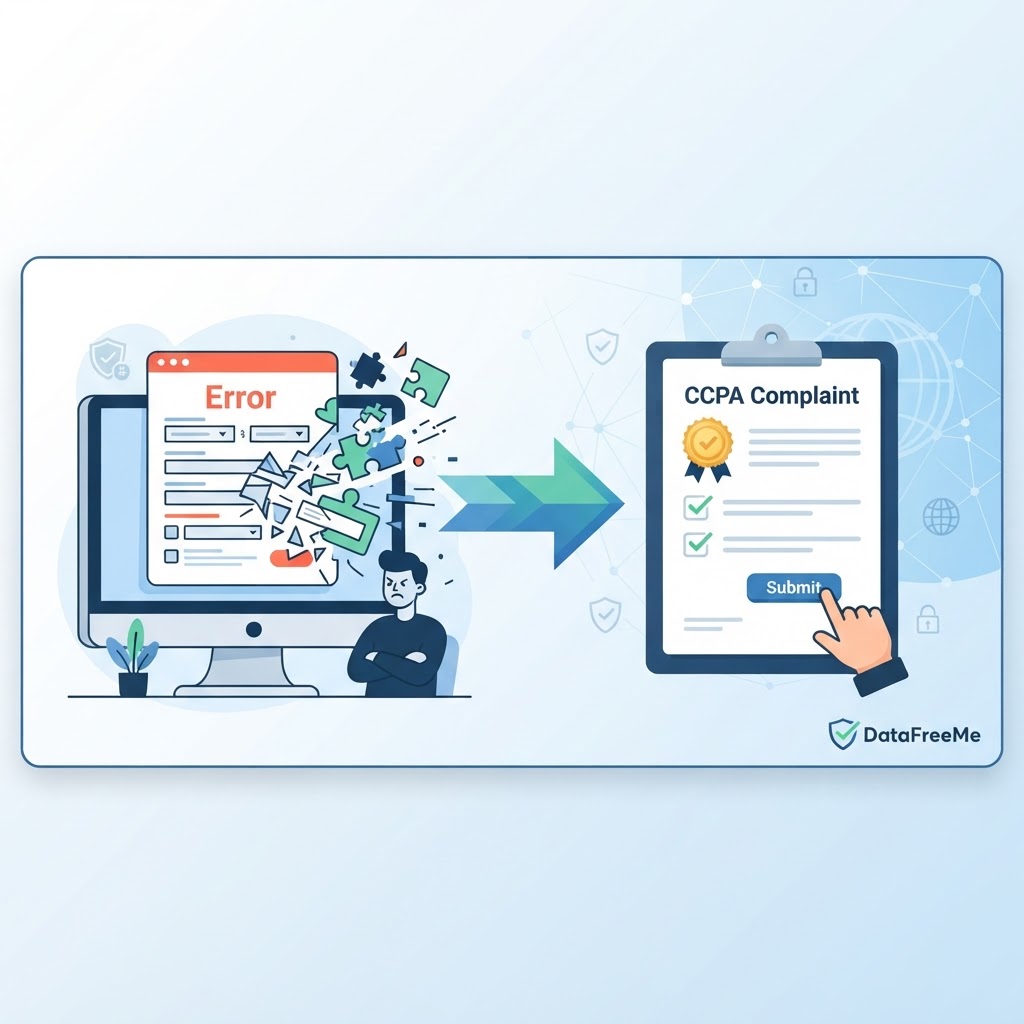
When you encounter a data broker broken opt out form submit CCPA complaint actions should be your immediate next step. If a website designed to allow you to exercise your privacy rights is non-functional or intentionally obstructive, it violates your statutory rights under the California Consumer Privacy Act (CCPA) §1798.105.
I am Stephen Sawyers, CEO of DataFreeMe. As a Data Security Expert, I have spent years observing how companies use technical friction to delay the removal of your personal information. At DataFreeMe, we specialize in providing a global, audit-driven approach to data broker management. We help you map your entire household's digital footprint across our database of 900+ data brokers to ensure your family's relational data graph is pruned effectively. We don't rely on magical one-click solutions; we rely on rigorous tracking, verified receipts, and clear statutory leverage.
What to do when a data broker broken opt out form requires a CCPA complaint?
In our experience, data brokers frequently use broken forms as a dark pattern to exhaust the consumer's patience. A "broken" form often acts as a digital dead-end. When you identify this, you must shift from a standard request process to a formal accountability process. The goal is to create an undeniable audit trail that serves as evidence if the broker refuses to comply.
To successfully handle a data broker broken opt out form submit CCPA complaint sequence, follow these operational steps:
- Document the Failure: Take high-resolution screenshots or screen recordings of the broken form. Include timestamps, the URL of the error page, and your console logs if you have technical capability.
- Attempt Alternative Communication: Most jurisdictions require you to attempt a good-faith effort. Send a written request via their privacy email address, clearly citing your rights under CCPA §1798.105.
- Establish a 45-Day Clock: Once your written request is sent, log the date. Under the CCPA, businesses generally have a 45-day window to respond to a verifiable consumer request. If they miss this, they are officially in violation.
- Escalate to Regulatory Bodies: If the company continues to ignore requests or keeps the form broken, file a formal complaint with the California Privacy Protection Agency (CPPA) or the Attorney General’s office.
How do you prove a data broker broken opt out form submit CCPA complaint is warranted?
Proving non-compliance requires rigorous manual privacy opt-out workflow hygiene. We have found that brokers often claim they never received a request to evade their statutory obligations. By keeping a detailed ledger of every interaction, including the exact time you attempted to use their form and the subsequent errors encountered, you provide the authorities with the documentation they need to investigate the broker's practices. This official documentation from the California Attorney General provides the legal framework for what a valid request entails.
Why is a data broker broken opt out form a strategic choice for them?
Many data brokers design their web forms with intentional friction. This is known as a dark pattern—a user interface designed to manipulate users into making decisions they wouldn't otherwise make. In this case, the decision is to give up on deleting your data. When a broker maintains a broken opt-out form, they are essentially banking on your apathy. They know that only a small percentage of users have the persistence to file a complaint against a data broker when an automated system fails.
We specialize in managing these hurdles at scale. Whether it is navigating web-form friction or dealing with aggressive verification tactics, our approach ensures you don't lose track of your progress. Managing your household as an interconnected graph is the only way to prevent re-listing. If you leave one family member's data unmanaged, the broker can use relational data to rebuild the entire household profile. Our mission at DataFreeMe is to help you prune this information systematically, turning a complex, adversarial process into a standard, trackable operation.
If you are struggling with a persistent data broker, remember that your data is your property. The law provides you with the leverage to demand its removal; you simply need the right operational framework to execute it. Do not accept a broken form as a final answer. Log the failure, cite your rights, and hold them to the 45-day deadline.
Take Control of Your Household Privacy
If you are ready to stop the cycle of data re-exposure, start by assessing your current exposure. You can use our free data broker exposure scan to see how many of the 900+ brokers we track are likely selling your information right now. Once you have a clear map, you can begin the process of systematic removal, ensuring each request is tracked, audited, and verified.
FAQ Section
What is the first step when a data broker's opt-out form is broken?
Document the failure with screenshots and attempt to send your request via their official privacy email address instead. Mentioning your specific statutory rights under the CCPA in that email creates a verifiable paper trail for later enforcement.
Does a data broker broken opt out form submit CCPA complaint actually result in removal?
Yes, filing a formal complaint creates an official audit trail that regulators can use to penalize the broker. While it takes time, it is the only way to force compliance when a company purposefully maintains broken infrastructure to evade removal requests.
How long do I have to wait for a response after filing a complaint?
Under the CCPA, you should allow for the standard 45-day response window from the date your request was received. If they remain unresponsive or the form remains broken after this period, you have sufficient documentation to proceed with a formal regulatory complaint.