
Upstream Data Aggregators Opt Out: A Tactical Guide
Learn how to perform an upstream data aggregators opt out to prune your household data at the source and stop the cycle of recurring privacy leaks.
In short: upstream data aggregators opt out is worth getting right. Here's what matters most for your situation.
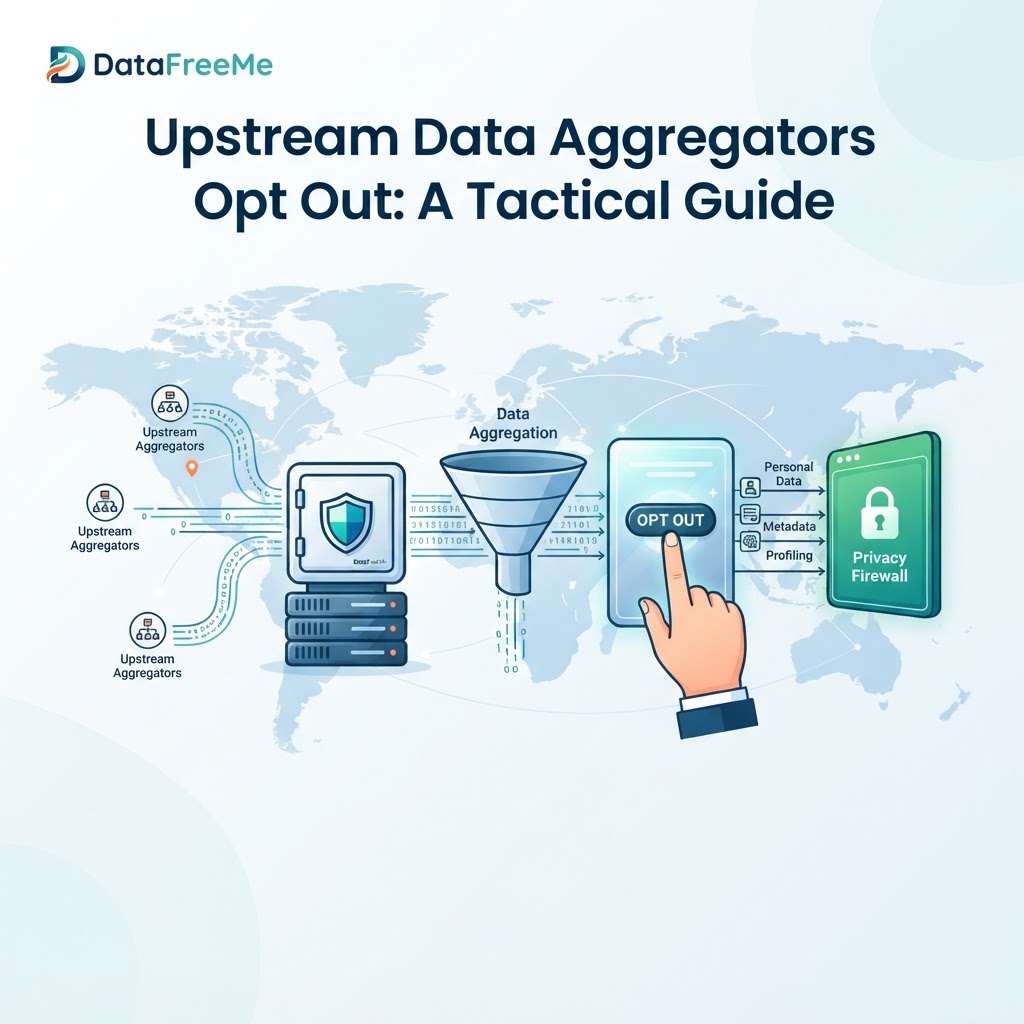
At DataFreeMe, we specialize in helping households navigate the complex ecosystem of global data brokerage, where our mission is to provide you with the operational tools needed for total privacy management. When you pursue an upstream data aggregators opt out, you are targeting the core infrastructure of the surveillance economy rather than just the visible consumer-facing websites. As a data security expert, I, Stephen Sawyers, have spent years mapping the flow of personal information; I have found that most "people search" sites are merely thin, user-friendly layers pulling data from massive, opaque, upstream data aggregators that rarely allow for simple "unsubscribe" clicks.
This guide is current for 2026.
Upstream data aggregators are essentially the wholesale distributors of the privacy industry. They ingest vast datasets from credit bureaus, public records, loyalty programs, and utility providers, then index this information into relational graphs to sell to lower-level brokers, marketers, and risk-assessment firms. Because these aggregators are not consumer-facing, they often design their systems to resist individual deletion requests, creating significant friction for the average person trying to reclaim their digital identity.
Why Is an Upstream Data Aggregators Opt Out Essential?
Most individuals mistakenly believe that removing their name from a few popular "people search" sites is enough. In our experience, this is like trimming the leaves off a weed while leaving the root intact. If you do not perform an upstream data aggregators opt out, the underlying source remains updated with your current information. These aggregators automatically re-populate the downstream sites you just cleaned, meaning your data reappears in a continuous, frustrating cycle. To effectively shrink your household's relational graph, you must go to the source.
We recommend approaching this as a disciplined administrative campaign. Our team at DataFreeMe has documented that when you treat privacy as a series of verifiable consumer requests, you force these organizations to process your data under the legal frameworks of statutes like the CCPA and GDPR. You can learn more about these requirements in our guide on verifiable consumer request requirements for the CCPA. By maintaining a rigorous audit trail of your opt-out status, you convert a chaotic privacy struggle into a manageable operational workflow.
How to Manage Your Household Relational Graph
Data brokers rely on "relational data" to keep your profile active. If you opt out yourself but ignore your spouse or adult children, the broker’s algorithm will often re-link your records based on your shared physical address, phone number, or history. This is why we advocate for removing family members from people search sites simultaneously. To handle the volume, you should check our guide on tracking 600+ opt-outs without losing your mind, which provides the tactical logic for batching these requests across your entire household.
When you start your upstream data aggregators opt out process, you must be prepared for "identity verification" hurdles. Some brokers use these as stalling tactics. You can read our analysis on whether a data broker requesting ID for opt out is legal to understand how to push back firmly against these unnecessary requests. Remember, your goal is to reduce the footprint of your household across the 900+ brokers we track at DataFreeMe. By consistently applying your statutory deletion rights, you shift the burden of compliance back onto the brokers who profit from your data.
Operational Best Practices for Privacy Maintenance
The privacy landscape is not static, and neither should your approach be. An upstream data aggregators opt out is only effective if you treat it as a recurring duty rather than a one-time event. We recommend a structured re-verification schedule to ensure that once a record is pruned, it stays that way. For further reading, consult the Privacy Rights Clearinghouse to stay updated on the latest legislative changes that impact your ability to demand information deletion.
Consider these core operational pillars for your data removal strategy:
- Batching: Use a spreadsheet to track your outreach, assigning a status (Sent, Pending, Resolved) to every aggregator you engage.
- Verification: Never assume a request was processed; always follow up if the 45-day statutory window expires without a confirmed deletion.
- Centralization: Map every household member's identifiers (aliases, historical addresses, phone numbers) before firing your first request.
- Documenting: Keep a record of every email receipt and automated "success" confirmation—these are your only leverage if a broker ignores your request.
By conducting your upstream data aggregators opt out with this level of rigor, you move from being a victim of surveillance capitalism to being a pragmatic privacy operator. Privacy is not a product you buy; it is an operation you maintain. If you are ready to take control, start by using our free data broker exposure scan to assess the current breadth of your digital profile and identify which aggregators are likely feeding your data into the market today.
FAQ
How do I identify which upstream data aggregators have my information?
You can identify relevant aggregators by using our data exposure scan or by checking public records to see which companies are named as sources on common people-search sites. Most large brokers like Acxiom or LexisNexis appear repeatedly as the source-of-record for downstream platforms.
What should I do if an upstream aggregator ignores my request?
If an aggregator ignores your request, document the original submission date and the expiration of the statutory response period, then file a formal complaint with the relevant regulatory body, such as the CPPA in California. Persistent, documented follow-ups are the most effective way to enforce your legal right to deletion.
Does an upstream data aggregators opt out delete my data everywhere?
An upstream opt-out is the most effective way to remove your data at the source, which prevents downstream sites from automatically re-scraping your information. However, you may still need to perform manual removals on specific public-facing sites that hold cached records that did not originate from that specific aggregator.