
How to Track Data Broker Opt Out Requests
Learn why you must track data broker opt out requests using a structured audit trail to ensure your family's data remains deleted from broker databases.
In short: track data broker opt out requests is worth getting right. Here's what matters most for your situation.
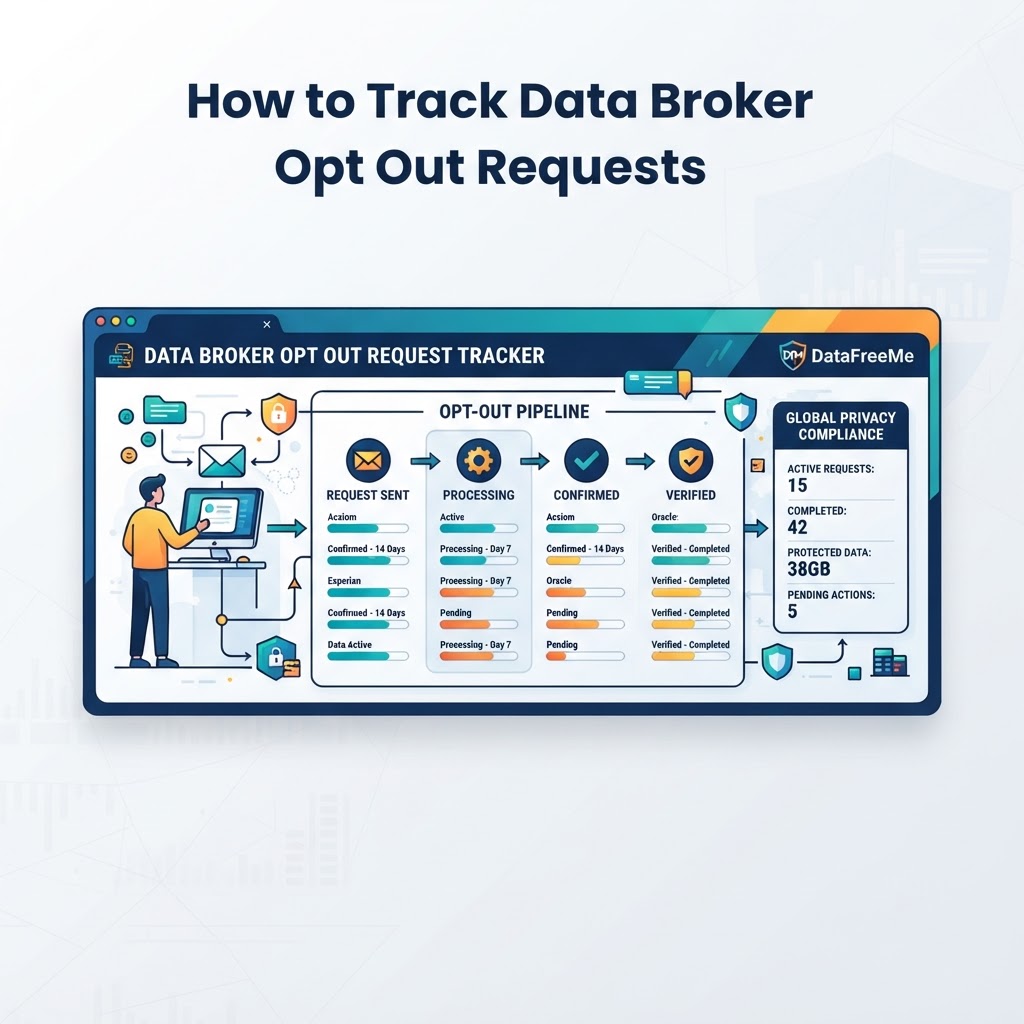
To effectively track data broker opt out requests, you must implement a centralized audit trail that logs submission dates, broker responses, and confirmation numbers for every household member. At DataFreeMe, we specialize in providing global users with the operational frameworks necessary to reclaim their personal data, treating privacy as a rigorous administrative campaign rather than a passive request.
Led by Stephen Sawyers, CEO of DataFreeMe.
As the CEO of DataFreeMe and a data security expert, I have spent years observing how data brokers rely on user fatigue to keep profiles active. My team and I have found that without a structured system, most individuals fail to follow up on the 45-day response windows mandated by laws like CCPA §1798.105. When you fail to track data broker opt out requests, you are effectively leaving your digital door unlocked for automated re-profiling.
Why Do You Need to Track Data Broker Opt Out Requests?
Data broker opt out tracking is the process of creating a verifiable, chronological record of your deletion requests to ensure compliance from the companies holding your data. Most people mistakenly believe that clicking an 'opt-out' button on a website is the final step. In our experience, this is merely the beginning of the operational cycle. Because data brokers operate as relational graphs, they often store data across multiple subsidiaries, meaning your information can 're-appear' weeks after a successful deletion. If you do not track data broker opt out requests, you have no evidence to present when a broker claims they never received your initial notification or when they inevitably re-index your data.
We recommend building an audit trail that captures the specific date of each request. Under California consumer law, entities are often given a specific timeframe to act. By maintaining a log, you create the necessary leverage to enforce your rights. We have seen that manual tracking, while labor-intensive, is the only way to maintain true digital hygiene in an ecosystem designed to evade transparency.
What is the Best Workflow to Track Data Broker Opt Out Requests?
To successfully manage your privacy, you must treat each household member as a node in an interconnected data graph. We have developed a workflow that ensures no data point slips through the cracks:
- Batching: Don't try to opt out of 900+ brokers at once. Batch your requests to manage the follow-up periods effectively.
- Logging: Use a spreadsheet to log the date of the request, the specific URL used, and any confirmation ID provided by the site.
- Status Hygiene: Categorize your requests into 'Pending', 'Verified', and 'Refused'. This helps you identify which brokers require a follow-up email.
- Persistence: Re-scan every 90 days. Data brokers refresh their records constantly; tracking your opt out requests means staying ahead of these refresh cycles.
If you need help identifying where your data is, you can use our free data broker exposure scan to see which sites are currently holding your information. Remember, your goal is not just to delete one entry, but to prune your entire household footprint.
Common Pitfalls When You Fail to Track Data Broker Opt Out Requests
The most common failure we see is the 'hope-based' strategy—where users send a request and never confirm if it was processed. Data brokers often use intentional friction in their web forms to discourage you. By failing to track data broker opt out requests, you play directly into their hands. They rely on the fact that you will forget to check in on the status of your request, allowing them to keep your profile active in their database.
Furthermore, managing your household is critical. If you opt yourself out but leave a relative in the database, the broker can use relational data—such as shared addresses or phone numbers—to re-link and re-populate your profile. You must remove family members as part of your comprehensive strategy. We have found that maintaining a clear audit trail of these family-wide requests is the only way to stop the bleed of personal information.
In summary, successful data privacy requires an uncompromising operational mindset. Whether you are using CCPA §1798.105 or GDPR Article 17, your rights are only as strong as your ability to prove they were exercised. Start by organizing your household records today, and never let a 45-day window pass without verification. If you need a structural starting point, visit DataFreeMe to begin your journey toward a cleaner digital footprint.
FAQ
How do I know if my opt-out request was successful?
A successful opt-out is confirmed when you receive a verifiable confirmation number or a follow-up email from the data broker. If you don't receive one, it is critical to keep a log of when you sent the request so you can file a follow-up within the statutory response window.
Why do I need to track data broker opt out requests every 90 days?
Data brokers frequently refresh their databases with new information from public records and other sources every 30 to 90 days. We've found that periodic re-checking is the only way to catch 'zombie' records that reappear after an initial removal.
Is there a difference between emailing a broker and using their web form?
Yes, email requests create a permanent, timestamped record in your inbox, which makes it much easier to track data broker opt out requests. Web forms often lack this transparency, which is why we advise users to take screenshots or document every field submitted when forced to use a portal.