
Prevent Relatives From Re-Exposing Personal Address
Learn how to stop your address from leaking through family members by managing your household as a single, connected data graph.
In short: prevent relatives from re-exposing personal address is worth getting right. Here's what matters most for your situation.
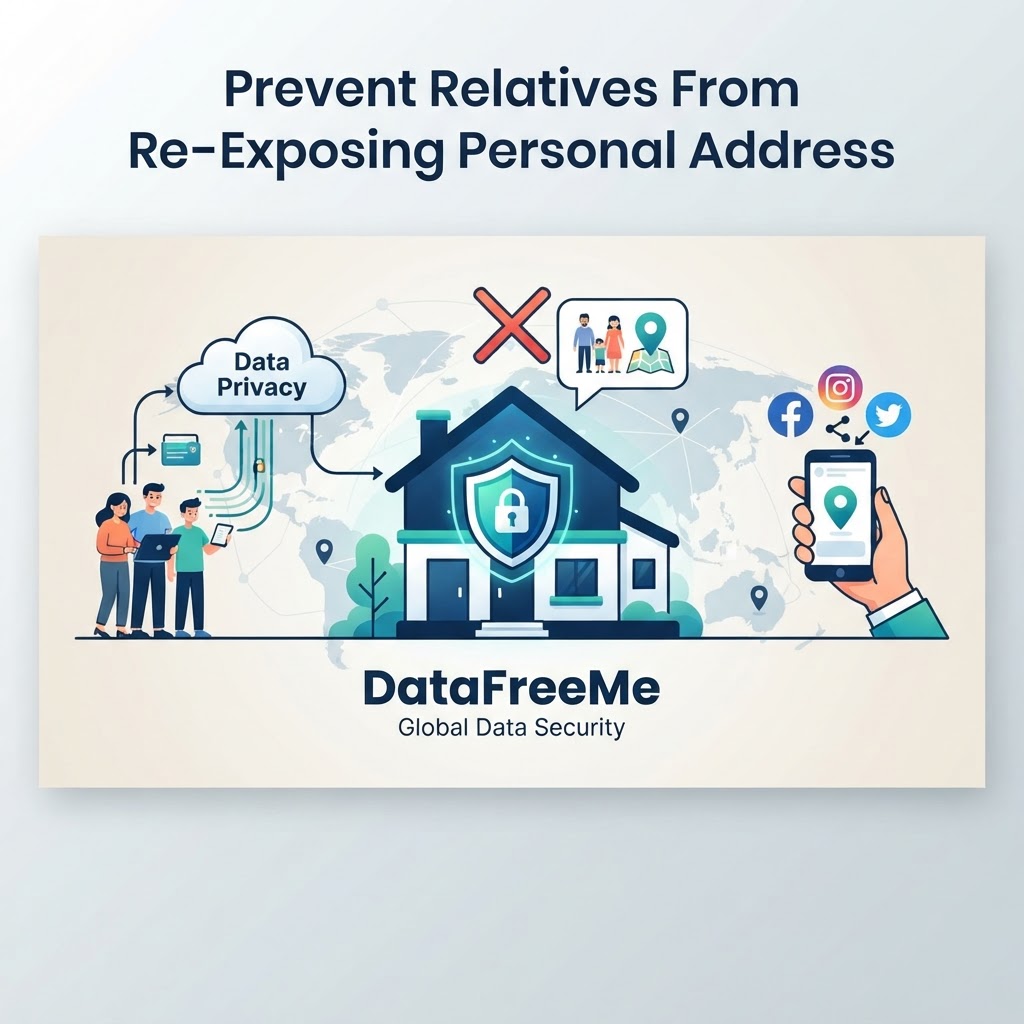
To prevent relatives from re-exposing personal address data, you must adopt a household-wide operational strategy that treats your family as a single, interconnected data graph rather than a collection of independent individuals. At DataFreeMe, we specialize in providing global data security solutions that empower you to manage these complex relationships and stop the cycle of accidental information leakage. I am Stephen Sawyers, CEO of DataFreeMe, and as a data security expert, I have overseen the removal of thousands of records from broker databases. In my experience, privacy is not a one-time task; it is an ongoing audit operation that requires meticulous tracking of every family member to effectively prevent relatives from re-exposing personal address details through relational data mapping.
Why Do My Relatives Keep Re-Exposing My Personal Address?
Data brokers operate by building relational identity graphs. When you opt out of a people-search site, you are often removing a single node in a larger web. If a family member remains active, or if your name remains linked to theirs in public records, data aggregators will simply pull your address information back into their database to complete the connection. This is the primary reason it is so difficult to prevent relatives from re-exposing personal address information: the broker views the entire household as a single entity.
We define a "relational data leak" as the unintentional re-listing of an individual's private contact information caused by the metadata associations of their family members. Because brokers scrape government property tax filings, marriage certificates, and utility records, they frequently cross-reference family links. If your spouse or child appears on a site, the automated algorithm maps your address to them, effectively undoing your previous opt-out work. To handle this, you must treat your household as a unified household data privacy management project.
How to systematically manage your household data graph
To successfully prevent relatives from re-exposing personal address data, follow this operational workflow:
- Map the Graph: Identify every family member and their associated contact points, including old email addresses and phone numbers.
- Batch the Opt-Outs: Use our tools to remove family members from people search sites simultaneously, ensuring that all records are purged at the same time to prevent cross-linked re-indexing.
- Establish an Audit Trail: Track every request. In our experience, brokers often ignore the first attempt; persistent follow-ups within the mandated 45-day window are often required.
- Monitor Refresh Cycles: Data brokers refresh their databases every 30 to 90 days. You must re-verify your status periodically to check if information has reappeared.
Is It Possible to Completely Secure My Household Address?
Complete invisibility is difficult, but you can significantly reduce the surface area for tracking. While no one-click tool can guarantee 100% removal, consistent application of statutory rights, such as those found in the California Consumer Privacy Act (CCPA), provides the legal leverage necessary to force compliance. By exercising your rights under CCPA §1798.105, you force these organizations to delete your data permanently. The key to success is moving beyond manual, sporadic requests and implementing a rigorous system for tracking, logging, and re-submitting removal requests for every family member who could potentially re-expose your address.
You can start by using our Free Data Broker Exposure Scan to see the extent of your current vulnerability. We track over 900+ data brokers globally, allowing us to help you maintain a clean data footprint. When you take the time to map out these relationships and ensure that every relative is opted out, you are essentially shrinking your household's footprint in the brokers' relational graphs, which is the only reliable way to stop the constant re-listing of your home address.
If you find that specific sites are resistant, refer to our guide on how to opt-out family members from data brokers. Remember, privacy is an operational campaign. By maintaining a clean audit trail and treating your household as a connected system, you gain the upper hand against surveillance capitalism. Our mission at DataFreeMe is to provide the tactical tools you need to secure your household data permanently.
FAQ
How can I prevent relatives from re-exposing personal address data?
To prevent relatives from re-exposing personal address data, you must opt out every family member residing at your address simultaneously. Brokers use relational mapping, so removing yourself while leaving a relative exposed allows the algorithm to re-associate your address with their active record.
Why does my address keep appearing after I requested a deletion?
Data brokers constantly refresh their records every 30 to 90 days, often re-scraping public documents that link your name to your relatives. To stop this, you must conduct recurring audits and re-submit removal requests whenever your household information appears on a new broker site.
Is it legal to demand my family's information be removed?
Yes, statutes like the CCPA §1798.105 and GDPR Article 17 provide you with the legal right to request the deletion of personal data. These laws allow you to act on behalf of your household to compel brokers to remove your addresses, phone numbers, and other identifying information from their platforms.