
The Best Manual Data Broker Removal Workflow
Learn the best manual data broker removal workflow to systematically scrub your family's data from 900+ brokers using verified audit trails.
In short: best manual data broker removal workflow is worth getting right. Here's what matters most for your situation.
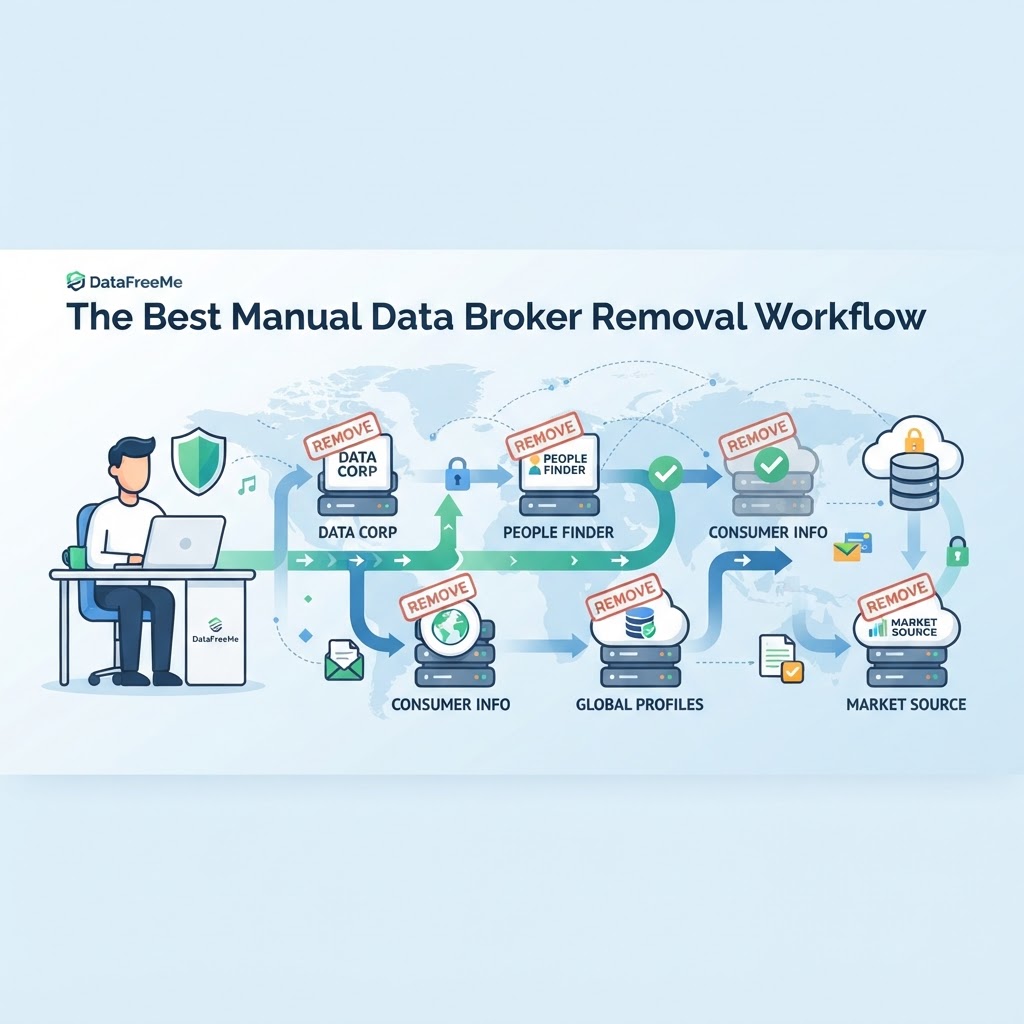
The best manual data broker removal workflow is a systematic, log-based process that treats personal privacy as an operational campaign rather than a one-time task. At DataFreeMe, a global leader in data privacy advocacy, we specialize in helping household heads reclaim their digital footprint by mapping, tracking, and executing verified removal requests across hundreds of platforms. Our team, led by data security expert Stephen Sawyers, provides the methodology you need to regain control over your family's relational data graph.
In our experience, most privacy services fail because they rely on "set-and-forget" automation that brokers ignore by design. True privacy requires a rigorous, manual approach where you treat every request as an audit-ready event. By maintaining a structured workflow, you can effectively navigate the 900+ data brokers that currently trade your personal profiles.
What Makes a Manual Workflow Effective?
A manual workflow is superior to automated tools because you retain direct control over your records and maintain a clear audit trail. When you manage your privacy as an IT operation, you ensure that requests are not only submitted but also verified, logged, and periodically re-audited. We have found that brokers often ignore automated requests or force users into recursive dark patterns to avoid compliance. By choosing the best manual data broker removal workflow, you are opting for high-fidelity execution over the thin, inconsistent results of black-box software.
The Importance of Relational Data Graphs
Data brokers do not just track you as an individual; they track your household as a connected graph. If you remove your own record but leave your spouse or children listed, the broker can easily re-map your household address and phone number to your file. To effectively prune your digital footprint, you must manage your household as a single entity, ensuring that all related entries are suppressed simultaneously. Our guide on how to opt-out family members from data brokers provides the framework for this systemic approach.
How Can You Build a Sustainable Removal System?
Building a sustainable system requires moving away from manual, one-off searches toward a batch-processing model. As we outline in our detailed tracking guide, you must implement a system for status hygiene and follow-up windows. Data brokers generally refresh their databases every 30 to 90 days, which makes a persistent, cyclical audit essential for long-term privacy.
Follow these steps to establish your own operational privacy campaign:
- Map Your Footprint: Use a tool like our free data broker exposure scan to identify which of the 900+ brokers currently hold your information.
- Batch Your Requests: Do not tackle them one by one. Group brokers by their verification requirements (e.g., email-only versus web-form) to increase your efficiency.
- Log Everything: Create a central spreadsheet to record the date of your request, the broker’s response, and any confirmation codes provided. This is your proof of compliance for future disputes.
- Verify Resolution: Use the data broker opt-out verification process to confirm that your data has actually been purged, rather than just hidden.
- Re-Audit Regularly: Set a recurring quarterly reminder to check for "re-appearance events" where your data may have been re-aggregated from public records.
Statutory rights such as CCPA §1798.105 (which is a key resource for understanding your rights in California) and GDPR Article 17 provide the legal backbone for your requests. By citing these regulations in your communications, you turn your request from a suggestion into a legally compelled action. Remember, documentation is your greatest leverage when dealing with companies that profit from non-compliance. You must maintain this audit trail to ensure that your household privacy remains intact over time.
Conclusion: Privacy as an Operational Campaign
Achieving privacy in an age of systemic surveillance is not about finding a magic "delete" button; it is about consistent, disciplined maintenance. The best manual data broker removal workflow relies on your ability to track, log, and verify each removal request while managing your family’s digital graph as one. By moving from reactive behavior to a proactive, manual operations strategy, you successfully strip brokers of their ability to monetize your household’s personal data. Start your audit today, be meticulous with your receipts, and take control of your digital identity.
Frequently Asked Questions
What is the best manual data broker removal workflow?
The best workflow is a systematic, log-based process where you track every removal request, maintain a central database of receipts, and periodically re-audit your records for reappearance every 30-90 days.
Why is manual removal better than automated services?
Manual removal allows for higher-fidelity execution, ensuring that you actually verify deletions rather than trusting an automated service that may struggle with broken or deceptive broker web forms.
How often should I audit my data broker records?
Because data brokers typically refresh their databases every 30 to 90 days, we recommend performing a recurring quarterly audit to identify and remove any data that may have been re-linked to your profile.