
Are Data Brokers Asking for Driver License Opt Out Legal?
Are data brokers asking for driver license opt out legal? Learn how to navigate ID demands and protect your privacy without handing over sensitive documents.
In short: data brokers asking for driver license opt out legal is worth getting right. Here's what matters most for your situation.
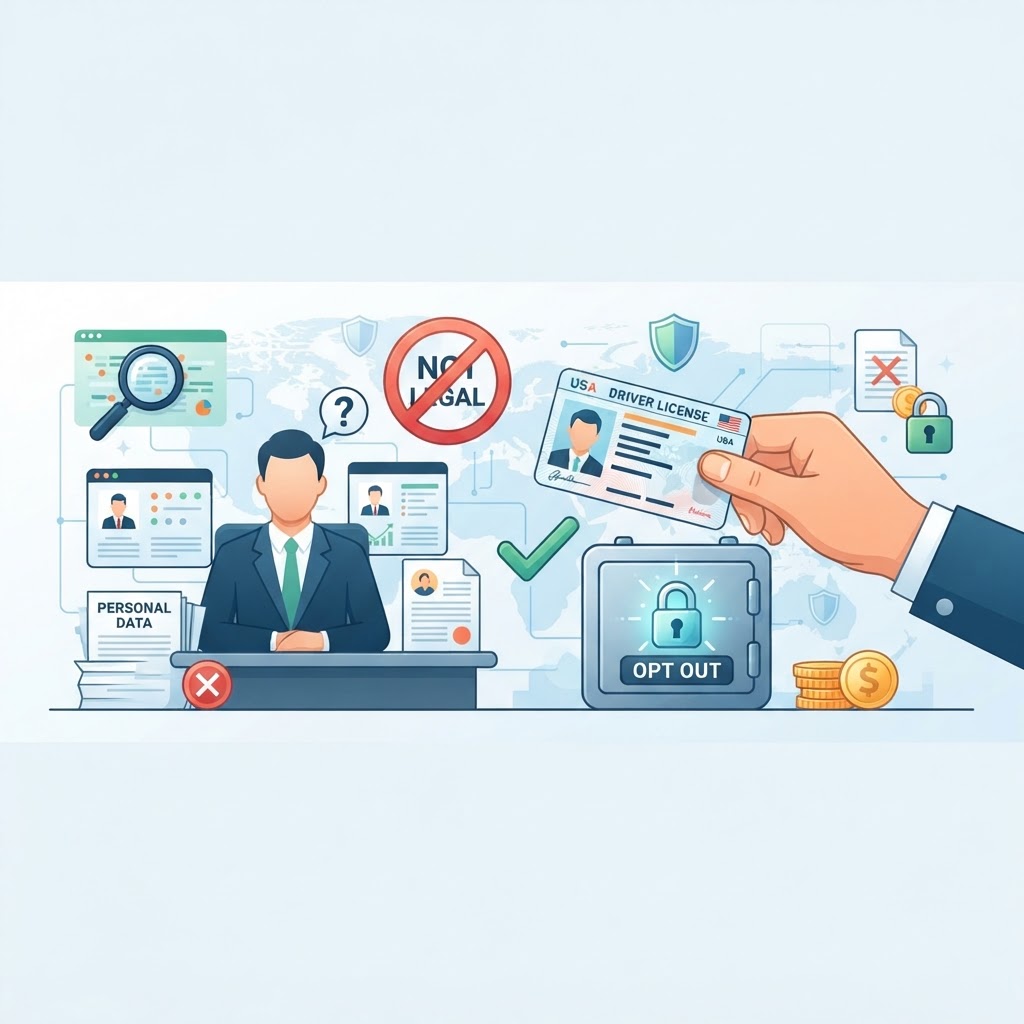
When you encounter data brokers asking for driver license opt out legal requirements, the short answer is that no US federal statute requires you to provide a copy of your driver's license to exercise your right to privacy. At DataFreeMe, a global leader in household privacy operations, we specialize in helping individuals regain control over their data footprint by navigating these predatory barriers. My name is Stephen Sawyers, CEO of DataFreeMe, and as a data security expert with years of experience in the industry, I have seen firsthand how these platforms use identification demands as a tactical deterrent to slow down opt-out requests.
We specialize in dismantling the relational graphs brokers build by using statutory leverage and meticulous audit trails. When a platform claims that data brokers asking for driver license opt out legal processes must collect your ID, they are often conflating identity verification with data minimization principles. In reality, most brokers collect this information not for security, but to build a more comprehensive profile on you, further enriching the very dataset you are trying to delete.
Is the Request for Your Driver's License Actually Necessary?
Data brokers operate on an business model that prioritizes data retention. When you initiate an opt-out, you are challenging their profitability, which is why you encounter friction like "we need to verify your identity." Our team at DataFreeMe has documented hundreds of instances where brokers demand government-issued IDs, yet these same companies store your personal records without requiring any authentication at all. This double standard is a hallmark of the industry.
Why Do Brokers Demand IDs Despite Privacy Laws?
Data brokers often justify these requests by claiming they need to prevent fraudulent removal requests. However, this is largely a manufactured hurdle. In our experience, providing a copy of your license simply hands over your most sensitive PII—including your address, date of birth, and driver’s license number—to an entity that specializes in aggregating and selling that exact data. If you are struggling with these demands, you may find our People Search Sites Removal Opt Out Guide helpful for understanding how to bypass these dark patterns.
Legally, under regulations like the CCPA, brokers are required to verify the identity of the consumer making the request, but they must do so in a manner that is proportionate to the risk. Collecting a high-resolution image of a driver's license is rarely the only path to verification. For those who want to understand the difference between rights, read our guide on CCPA vs GDPR: Which Deletion Right Are You Using? to learn how statutory mandates apply.
Tactical Steps When Facing ID Demands
If you encounter data brokers asking for driver license opt out legal documentation, do not reflexively comply. Follow this tactical workflow to maintain your security:
- Request Alternatives: Inform the broker that you do not consent to sharing government-issued identity documents for data deletion purposes. Ask for alternative verification methods, such as confirmation through email or existing public record identifiers they already possess.
- Redact Sensitive Data: If you must provide verification, never send an unredacted license. Mask everything except your name and address if the site forces your hand.
- Maintain an Audit Trail: Log every communication. If a broker denies your request based on your refusal to provide a license, document the interaction. This is vital for future complaints to regulatory bodies like the California Privacy Protection Agency.
- Utilize Statutory Language: Cite specific sections of the law. For California residents, referencing CCPA 1798.105 helps remind these companies that you are exercising a protected legal right, not asking for a favor.
For more deep-dive strategies, check out Mastering Family Privacy Operations: The Complete Guide. Privacy is not a one-time event; it is an ongoing operational campaign. By tracking your requests in a dedicated Data Broker Deletion Audit Trail Spreadsheet, you can ensure that you are not just deleting records today, but preventing them from reappearing tomorrow. The goal is to prune the relational graph that links your family members to the same data vulnerabilities.
If you feel overwhelmed by the process, remember that silence is not compliance. Data brokers count on the fact that you will get tired of the friction and quit. By maintaining a rigorous, documented process, you strip away their power. Continue to monitor your footprint, stay consistent with your follow-ups, and ensure your entire household is accounted for. For additional context on how these entities operate, the Federal Trade Commission provides resources on consumer data rights and industry practices that underscore the importance of maintaining your own data hygiene.
Ready to start your audit? Perform a Free Data Broker Exposure Scan today to identify exactly which brokers are holding your data and begin your removal process.
Frequently Asked Questions
Are data brokers legally allowed to demand a driver's license for opt-out requests?
While brokers are allowed to verify your identity, they are not strictly required by federal law to demand a driver's license. In many cases, this is a tactical hurdle used to discourage removal or collect more sensitive information about you.
What should I do if a broker refuses to delete my data without an ID?
You should request alternative verification methods, such as confirming your identity through email or secondary public records. If they persist, document the interaction as part of your audit trail and consider filing a formal privacy complaint.
Is it safe to send a photo of my driver's license to a data broker?
It is generally not recommended to share unredacted government IDs with data brokers. These companies thrive on collecting your PII, and providing them with your driver's license information only grants them more data to include in their profiles.