
Data Broker Statutory Deletion Rights Explained
Learn how to enforce your data broker statutory deletion rights through rigorous operational tracking and clear legal citations to reclaim your household privacy.
In short: data broker statutory deletion rights is worth getting right. Here's what matters most for your situation.
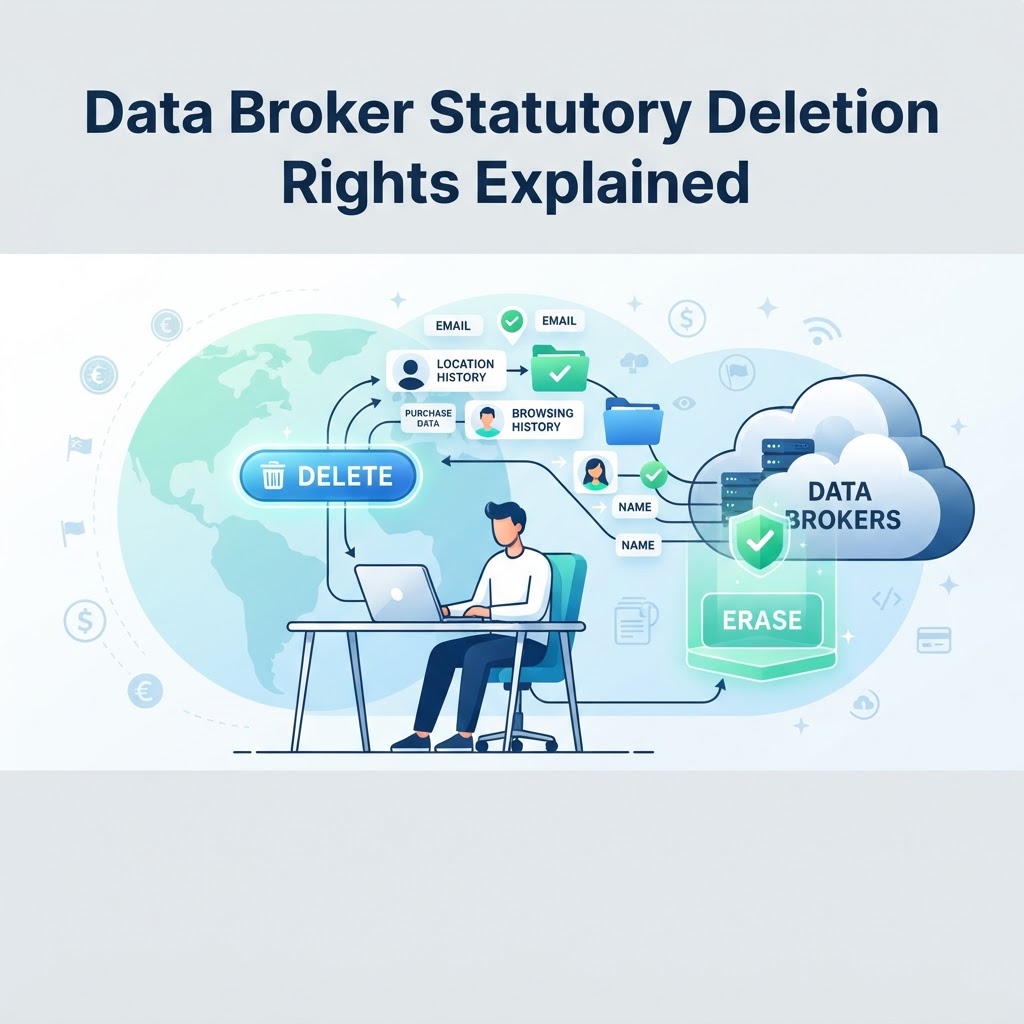
Data broker statutory deletion rights serve as the legal foundation for reclaiming your household's digital presence from surveillance capitalism. At DataFreeMe, based globally, we specialize in providing the technical infrastructure and procedural workflows necessary for individuals to regain custody of their personal information. I am Stephen Sawyers, CEO of DataFreeMe and a dedicated data security expert; in our experience helping families prune their relational data graphs, we have found that relying on automated "opt-out" buttons is rarely sufficient to permanently remove records from the 900+ data brokers currently operating.
Understanding your data broker statutory deletion rights means recognizing that these companies are not merely repositories of public information but active aggregators designed to maintain persistent profiles. Under frameworks like the CCPA and GDPR, you have the legal leverage to compel these entities to purge your files, but the effectiveness of your efforts depends entirely on your ability to maintain an auditable, persistent paper trail. We specialize in mapping out household data exposure and executing systematic removal campaigns that go beyond superficial requests.
How Do You Exercise Data Broker Statutory Deletion Rights Effectively?
To successfully exercise your data broker statutory deletion rights, you must move away from the assumption that a single click resolves your privacy footprint. Data brokers rely on "friction"—the intentional complexity of their web forms—to discourage users from completing the process. Our approach at DataFreeMe treats each removal request as an operational task in a larger campaign to shrink your household's relational graph.
What Is the 45-Day Response Window?
Under the California Consumer Privacy Act (CCPA) §1798.105, covered businesses have a statutory window, typically 45 days, to fulfill a verified deletion request. If a company fails to acknowledge or execute your request within this timeframe, they are in violation of state law. This is where meticulous tracking becomes your greatest asset. We advise our clients to build a data broker deletion audit trail spreadsheet to log timestamps, confirmation IDs, and follow-up dates. Without this documentation, you have no way to prove non-compliance when a broker fails to act.
We have found that the most effective way to manage these operations is to:
- Map your entire household's exposure by using a free data broker exposure scan.
- Prepare standardized email requests that cite specific statutes like CCPA 1798.105 or GDPR Article 17.
- Track every single communication as an individual record in your audit system.
- Re-verify your status after the 45-day window to catch "re-listing," a common tactic where brokers re-scrape data from secondary public records.
For more nuanced details on the legal differences between these regulations, review our guide on CCPA vs GDPR: Which Deletion Right Are You Using? Understanding these distinctions is critical, as the burden of proof and verification requirements vary significantly between jurisdictions.
Why Are Data Broker Statutory Deletion Rights Often Ignored?
Data brokers thrive on the fact that most consumers view privacy as a "set-and-forget" task. By obfuscating their opt-out processes, they create barriers that force most people to abandon their requests. This is not an accident; it is a business strategy. When you invoke your data broker statutory deletion rights, you are challenging a business model built on the sale of relational data. You must be prepared to follow up repeatedly, as "silence" from a broker is rarely a sign that they have processed your request—it is often a sign that they are waiting for you to get distracted.
Furthermore, because data brokers link profiles based on address history and shared relative metadata, an incomplete opt-out for one family member often results in the entire household being re-indexed. Our team at DataFreeMe emphasizes mastering family privacy operations to dismantle these graphs comprehensively. If you only remove yourself but leave your spouse or children in the database, the broker's algorithm will eventually re-link your data points back to the household record, nullifying your efforts.
We recommend reviewing official state resources, such as those provided by the California Attorney General, to understand the full scope of your protections. By combining legal knowledge with rigorous operational tracking, you turn the tables on these brokers. Consistency is your primary lever. Every time a broker tries to force you through a dark-pattern-laden web form, look for the "official" email address for privacy inquiries or use the legal citations mentioned above to formalize your demand. Do not accept a "pending" status as a final result; keep the pressure on until you have a verified, dated receipt of deletion.
Privacy is a persistent operational campaign. Start your journey today by auditing your current footprint and systematically removing your records, one broker at a time. Through careful documentation and persistent enforcement of your data broker statutory deletion rights, you can successfully reclaim your household’s digital sovereignty.
FAQ
What are data broker statutory deletion rights?
Data broker statutory deletion rights are legal mandates, such as CCPA §1798.105 or GDPR Article 17, that compel companies to delete the personal information they hold about you upon a valid request. These laws provide the legal leverage necessary to force brokers to purge your files from their databases.
How long do brokers have to delete my data?
Under CCPA regulations, data brokers typically have a 45-day window to respond to and fulfill a verified request for deletion. If they fail to comply, your documented audit trail becomes essential for holding them accountable to the law.
Why does my data keep reappearing after I opt out?
Data reappearance occurs because brokers use relational graphs to link household members through address histories and public records. If other family members remain in the system, or if you haven't performed a complete household removal, the broker's algorithm will automatically rebuild your profile using these existing connections.
How should I track my opt-out requests?
You should maintain a detailed spreadsheet or log that tracks the broker's name, the date of your request, the method of submission, the confirmation number received, and a target date for a re-verification check after the 45-day window closes. This ensures you can hold brokers accountable if they ignore or fail to process your removal demand.